


A Turning Point After Crisis
For investors, 2009 will be remembered as a year of dramatic reversal. After one of the most severe market declines in modern history, the year marked a turning point as financial markets began to stabilize and recover. Confidence was deeply shaken, economic conditions were still fragile, and uncertainty remained widespread, yet markets moved ahead of the economy, pricing in a future recovery long before it was visible in the data.
The experience of 2009 reinforced a core investment lesson: markets are forward-looking, and periods of maximum pessimism often lay the groundwork for powerful recoveries.
Markets Bottom Amid Extreme Fear
The year began under extraordinary stress amid the financial crisis. Equity markets continued falling through early March as investors grappled with fears of systemic collapse. Major financial institutions remained under pressure, credit markets were strained, and economic data continued to deteriorate. Unemployment was rising rapidly, corporate earnings were falling, and confidence was extremely low.
In early March, U.S. equities reached their trough, with the S&P 500 down more than 50% from its 2007 peak. At that point, investor sentiment was overwhelmingly negative, and many questioned the stability of the global financial system itself. However, it was precisely during this period of fear that markets began to turn.
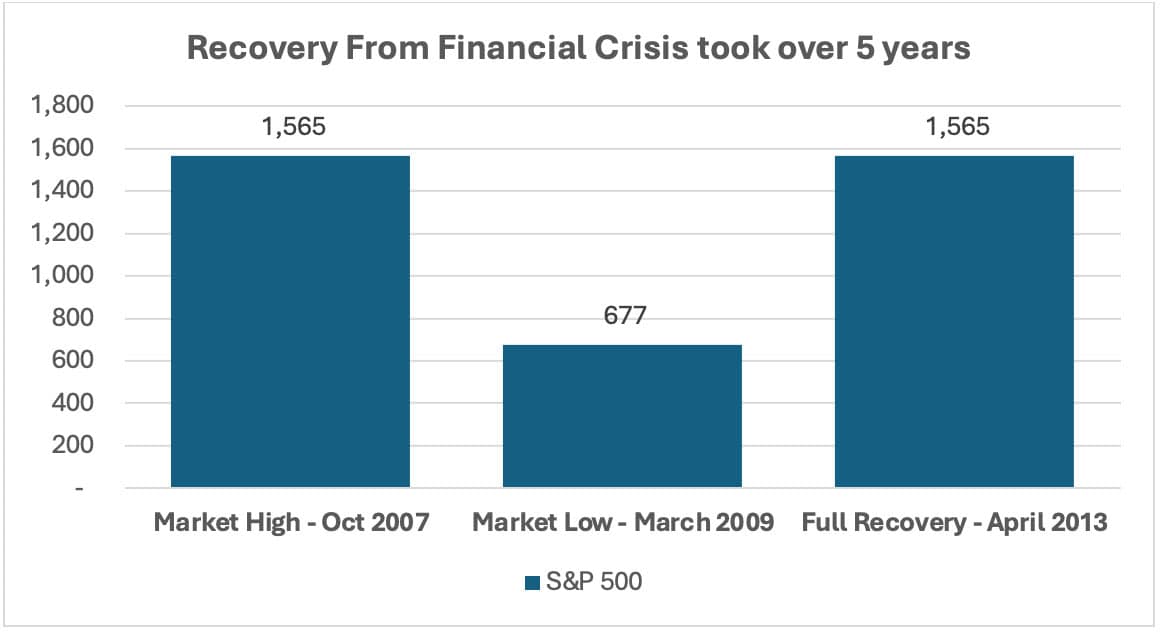
Aggressive policy actions by governments and central banks, combined with improving conditions in credit markets, helped restore confidence. As liquidity returned and worst-case scenarios failed to materialize, investors gradually re-entered risk assets.
Extraordinary Policy Response Drives Stabilization
A defining feature of 2009 was the unprecedented policy response to the financial crisis. In the United States, the Federal Reserve maintained near-zero interest rates and expanded its balance sheet aggressively, providing liquidity to financial institutions and supporting credit markets. These actions helped ease funding pressures and stabilize the banking system.
At the same time, fiscal policy played a major role. The U.S. government implemented large-scale stimulus programs aimed at supporting economic activity, stabilizing housing markets, and preserving jobs. Similar measures were taken globally, as policymakers sought to prevent a deeper and more prolonged recession.
For investors, these actions were critical. They reduced the risk of financial system collapse and laid the groundwork for recovery, even as economic conditions remained weak. The importance of policy support became a recurring theme in markets in the years that followed.
Equity Markets Stage a Historic Rebound
Once markets found their footing, the rebound was swift and powerful. From the March lows, equities rallied sharply, driven by improving liquidity, declining credit stress, and growing confidence that the worst of the crisis had passed. By year-end, the S&P 500 had gained approximately 26%, marking one of the strongest annual returns in decades.
Leadership came from sectors that had been most heavily punished during the downturn. Financial stocks rebounded as concerns about solvency eased, while economically sensitive sectors such as technology, industrials, and consumer discretionary stocks also performed well. The rally reflected a broad reassessment of risk rather than strong underlying economic growth.
Importantly, markets advanced well ahead of fundamentals. Earnings were still depressed, unemployment remained elevated, and economic growth was only beginning to stabilize. The disconnect highlighted the market’s tendency to move in anticipation of future improvement rather than current conditions.
Credit Markets Heal and Confidence Returns
Credit markets showed significant improvement in 2009. Corporate bond spreads narrowed meaningfully as default fears receded and access to capital improved. Investment-grade and high-yield bonds both delivered strong returns as investors regained confidence in corporate balance sheets.
This healing in credit markets played a crucial role in supporting the equity recovery. Improved access to financing allowed companies to refinance debt, rebuild liquidity, and plan for future growth. For diversified portfolios, fixed income continued to provide stability while also contributing positively to overall returns.
Economic Conditions Remain Challenging
Despite improving markets, economic conditions remained difficult for much of the year. Unemployment continued to rise, consumer confidence was fragile, and housing markets remained under pressure. While the pace of decline slowed and growth eventually resumed, the recovery was uneven and slow.
This divergence between markets and the economy proved unsettling for many investors. However, it underscored the importance of maintaining a long-term perspective, as markets often recover well before economic data turns decisively positive.
Lessons from a Year of Recovery
By the end of 2009, markets had reclaimed a sense of stability, though scars from the crisis remained. The year demonstrated the power of diversification, the importance of staying invested through periods of extreme volatility, and the critical role policy actions can play in restoring confidence.
For long-term investors, 2009 reinforced that recovery often begins when uncertainty feels greatest—and that disciplined investment strategies are essential during periods of profound market stress.