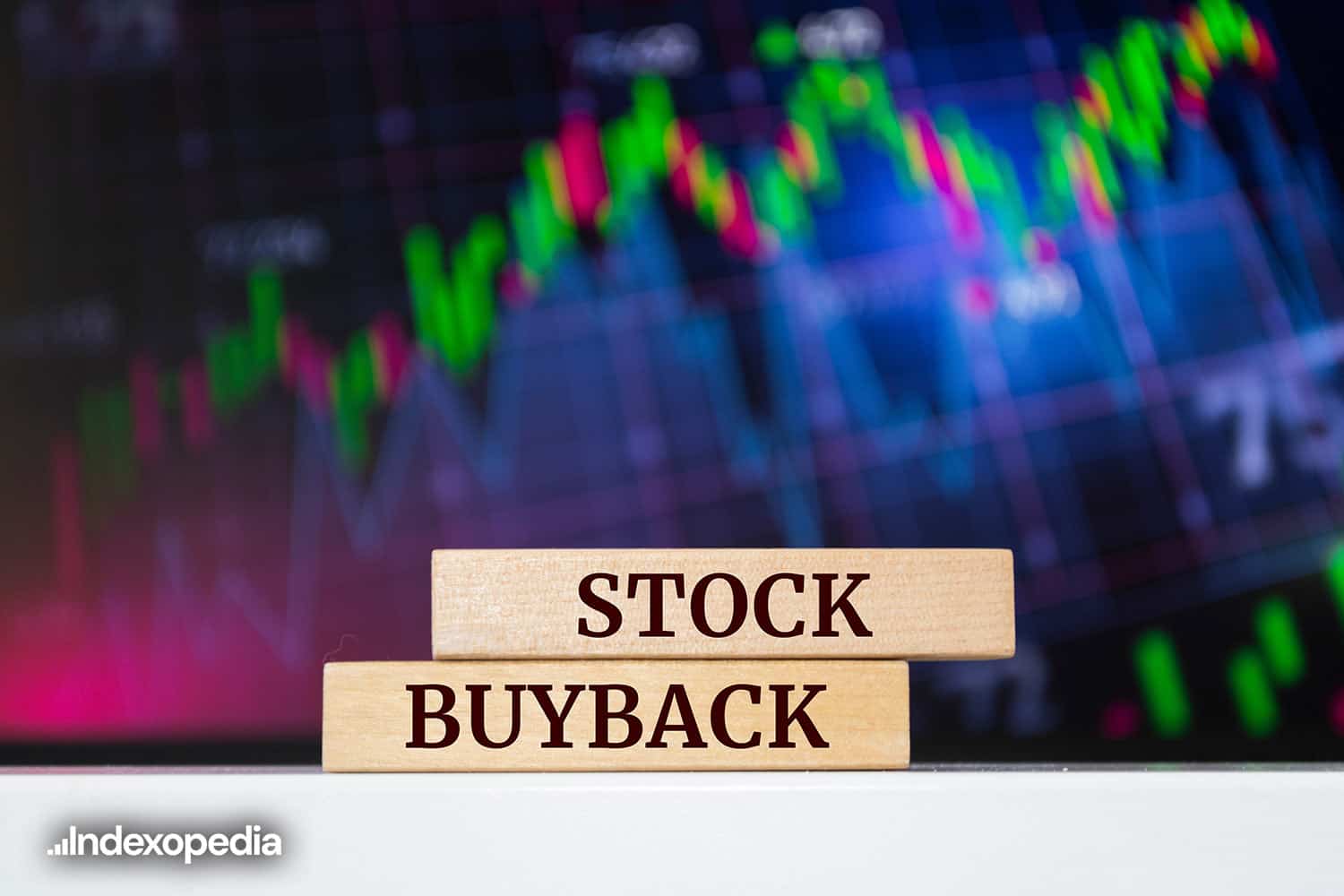


One way to make money when investing in stocks is through dividends–when companies pay you interest incrementally. Dividends aren’t the only way, however. Stock buybacks also known as share buybacks or share repurchase programs are another way for investors to get added value from a company as they make more money from shares.
What is a Stock Buyback?
Also known as a share repurchase program, stock buybacks are when a company repurchases their stock. In more detail, companies use their own cash to buy shares on the secondary market from any investors willing to sell. During stock buybacks, the number of shares floating around goes down, and assuming all things are equal, the value of the shares go up. Stock buybacks can be a a company’s alternative to increasing dividend payments.
It’s key to note that shareholders don’t have to sell their stock back to the company. So, if you own stock in Apple, you don’t have to sell them back to the company if they do a stock buyback.
How Do Stock Buybacks Work?
Before a stock buyback takes place, the company in question makes an announcement saying its board of directors is doing a repurchase authorization. This repurchase authorization comprises details about how much money the company will dedicate to buy back shares or their shares outstanding. That said, companies can announce a repurchase authorization and double back if they decide it isn’t the right business move.
In terms of how stock buybacks create more value for investors, it’s usually a matter of supply and demand. When the demand for a stock increases, oftentimes, the value of the stock does too. With this in mind, companies will buy shares of their stock to help increase the demand and thus value of their stock. Additionally, stock buybacks lead to fewer shares circulating and increased dividends for existing shareholders. Stock buybacks can also create value for companies when they feel their shares are undervalued.
Advantages and Disadvantages of Stock Buybacks
Aside from increasing value for shareholders, stock buybacks have other advantages too.
Tax efficiency
When investors receive dividend payments, they’re taxed as ordinary income. There are no tax implications when stocks increase in value and you hold versus sell, however. That said, selling shares back to a company can trigger capital gains taxes.
Provides exit strategy
If a shareholder owns company stock and wants to let go of it, buybacks can be a good time to do that, especially because they’re able to get cash back for their shares.
May boost EPS
Because a company’s shares outstanding decreases during a share buyback, it can boost a company’s earnings per share, which is an organization’s net profits divided by their shares outstanding. EPS is a measurement used to determine how well a company is performing and a high EPS could be attractive to investors.
Here are some disadvantages of stock buybacks:
Company may be overvalued
A downside to stock buybacks is they can impact a company’s earnings per share. Since stock buybacks reduce the number of shares outstanding in a company, they can, in turn, increase a company’s EPS and make the company seem to be performing better than it is.
May not be best use of cash
As mentioned, when a company does a stock buyback, they sometimes use their own cash. There may be better uses for the cash that could help company growth long term. That said, some companies use debt to finance stock buybacks, which may also be an inefficient strategy.
Can be abused by managers
Sometimes, managers take advantage of stock buybacks and use them as an opportunity to improve the value of their personal shares. For instance, they could do a stock buyback and temporarily boost the value of their shares for an option trade. Likewise, managers may be distributing too much stock to themselves and diluting the ownership of shareholders consequently. Buybacks could be a way to cover this up.
Stock buybacks can be beneficial to investors but it’s important to understand what a company’s motive is. If the intent is to boost earnings per share and hide financial challenges or mask unethical practices among executives, it could lead to losses on the part of investors. Unsure about weather to partake in stock buybacks? Reach out to someone from our team today.