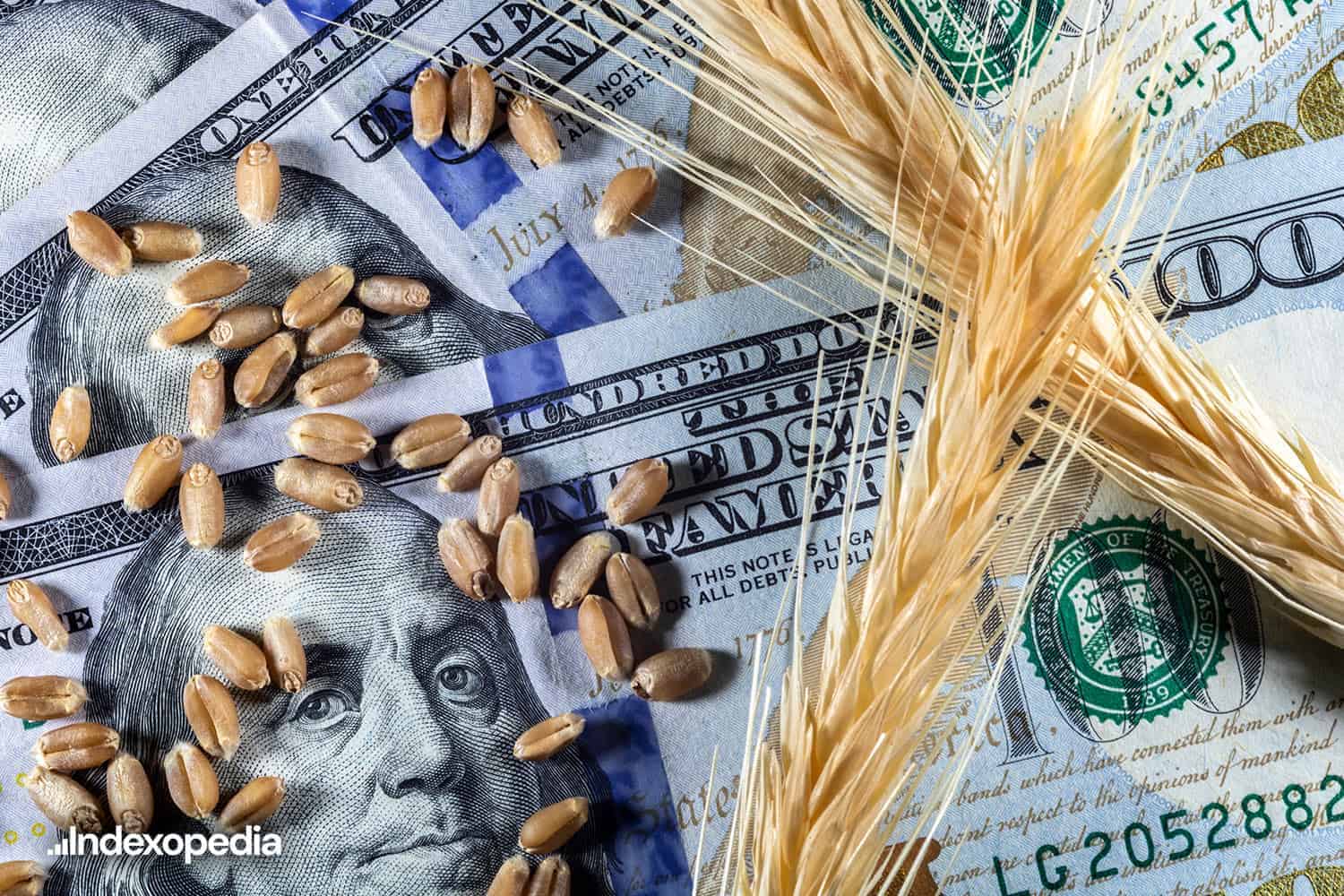


Commodities are raw materials used to create products and services. Another way to define commodities is that they’re economic goods that can be bought and sold.
When trying to hedge against inflation, commodities can be a go-to investment. They’re also an asset that investors can use to diversify their portfolios. Investors can buy and sell commodities or alternatively, trade commodity derivatives – when an investor profits from commodities they don’t actually own – on a public exchange.
How to Trade Commodities
There are usually two types of people who invest in commodities. The first are individuals who need to use the commodity for production of a product or service. The second is an investor who wants to capitalize on commodity price increases.
In terms of the latter, there are multiple ways to trade commodities but one of the most common is by futures contracts. Futures contracts are a legally binding agreement to buy or sell commodities at a specific time in the future. With futures contracts, investors are betting on what they think will be the future value of the commodities they’re trading. For instance, if an investor predicted the price of oil would go up, they may go long (buying with expectation that the price will increase), and if they thought the price of oil would go down, they’d go short (buying with the expectation that the price will decrease).
Commodities are usually traded on commodity exchanges. One of the largest in the U.S. is the New York Mercantile Exchange (NYMEX), which happens to be a part of the Chicago Mercantile Exchange Group. Others include the Intercontinental Exchange (ICE) in Europe, and the Shanghai Futures Exchange in Asia. To do future contracts for commodity trading, you need brokerage accounts that specialize in futures and options.
It’s important to note that people who trade commodities via future contracts aren’t trading a physical commodity. For individuals who prefer trading physical commodities, they can do so by purchasing hard commodities like gold or silver. However, transaction costs may be higher this way.
A third option for trading is to buy the stock of a company that produces a commodity of interest. For instance, one could buy stock in a milk company or oil refining company. Investing in the stock of a company that deals in commodities may be a lower risk option as investors aren’t solely relying on the price of a commodity to realize gains. Other factors like a companys’ performance can help balance the risk. Likewise, if a company isn’t managed well, despite the commodity price being high, it could cause the stock value to plummet. If you need help with trading commodity stocks, it may be a good idea to reach out to a financial advisor.
Types of Commodities
There are two primary categories of commodities – hard and soft – and four main types. Here is a breakdown of each.
Hard commodities
Hard commodities are usually natural resources like energy and metals.
Energy: Energy is classified as a hard commodity and can include crude oil and other items refined from it, like natural gas, ethanol, coal, or propane. Alternative energy like solar can also go into the hard commodity bucket.
Metals: Precious metals such as gold, silver, copper and aluminum are considered hard commodities.
Soft commodities
Products that must be grown and tended to fall into the soft commodity bucket. Soft commodities can experience more volatility because of the many factors that can impact its production.
Agricultural products: Soft commodities comprise agricultural products like wheat, soybeans, corn, coffee and lumber.
Livestock and meat: Animals and animal products that are consumed by consumers can be soft commodities. Think beef, chicken, pork, and dairy products.
Risks With Commodity Trading
The price of commodities is affected by supply and demand in the global economy, which can make them vulnerable to market volatility. The price fluctuations can also make commodities risky both when traded as future contracts or bought as stocks. Other factors like supply chain disruptions and political unrest can create risk for commodity trading.
Commodity investing can be complex, so it’s ideal for seasoned investors, ones who have done their research, or individuals who have sought advice from a finance professional.