


On October 1, the US government entered a shutdown after Congress failed to pass new funding.
The headlines sound ominous, but should investors really be alarmed?
Not necessarily. Shutdowns are disruptive, but they’re usually temporary. Federal workers will eventually return, agencies will restart, and backlogged data will be released. Still, even a brief disruption can hurt confidence and add short-term volatility to markets.
So what happens to portfolios when Washington grinds to a halt? And what, if anything, should investors do about it?
How a Government Shutdown Happens
A government shutdown occurs when Congress fails to pass legislation that funds federal agencies and programs, or when the President refuses to sign it into law. Without that approval, non-essential parts of the government lose legal authority to spend money.
Certain operations, like national defense, law enforcement, air traffic control, and Social Security payments, are classified as “essential” and must continue during a shutdown. But essential doesn’t mean immune from financial stress. Essential workers are supposed to continue working without pay, which can create real financial hardship and tension.
For example, air traffic controllers are required to keep planes moving safely through US skies, even in a shutdown. Yet they may go days or weeks without a paycheck. Meanwhile, agencies like the FAA are furloughing support staff, which adds to strain on the system and risk of delays.
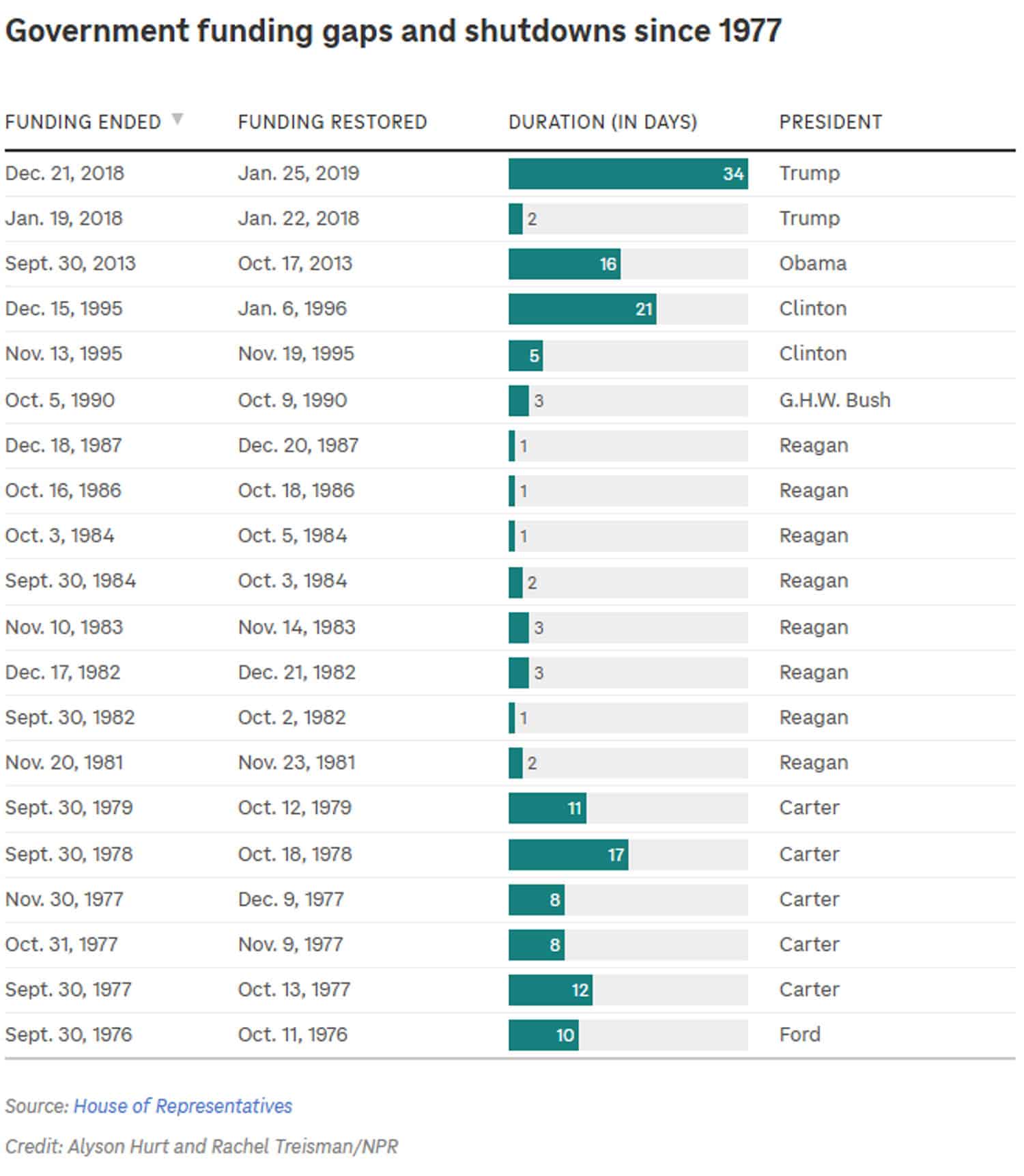
Shutdowns aren’t new. Since the 1970s, there have been 21 funding gaps, though most are short. The longest in recent memory lasted 35 days from late 2018 to early 2019, costing the economy an estimated $11 billion according to the Congressional Budget Office.
It’s also important to distinguish a shutdown from a debt ceiling crisis. In a shutdown, the government keeps paying its interest obligations. A debt ceiling standoff, on the other hand, threatens the ability to service debt — a far more serious risk to markets.
While shutdowns are disruptive, they’re usually temporary. The political process, messy as it can be, reaches a funding agreement eventually.
What Are the Economic Impacts of a Government Shutdown?
Some impacts are immediate, while others unfold over time as delays, lost income, and uncertainty compound.
Disrupted Income and Spending
Hundreds of thousands of federal workers and contractors stop receiving paychecks. Even those deemed “essential” continue working without pay until funding is restored.
For households living paycheck to paycheck, that means reduced spending on goods and services. This drag can hit local economies near military bases, airports, and government hubs the hardest.
Delayed Economic Data
Federal agencies such as the Bureau of Labor Statistics, the Census Bureau, and the Department of Commerce suspend regular data releases. That means reports like monthly jobs data or GDP revisions can be postponed, leaving investors and policymakers flying blind.
The absence of timely data makes it harder for investors to interpret the economy’s condition. It’s also harder for the Federal Reserve to gauge progress on inflation and growth, which, of course, has been a major topic lately amid the possibility of rate cuts.
Business Disruptions
Many industries that rely on federal approvals or inspections can face temporary slowdowns. For instance:
- Homebuyers may encounter mortgage delays if IRS income verification systems are offline.
- Small business loans backed by the Small Business Administration (SBA) are suspended.
- Federal contractors pause projects, which can lead to cascading effects on supply chains and employment.
Short-Term Economic Drag
Historically, shutdowns shave a fraction off GDP growth for each week they last. The 2018-2019 shutdown, the longest on record, trimmed an estimated 0.1-0.2 percentage points from quarterly GDP growth for every week the government was closed, according to the Congressional Budget Office.
Much of that lost activity often bounces back once operations resume, but the timing can be unpredictable.
How Do Markets Typically React?
For all the noise surrounding a government shutdown, markets take them in stride.
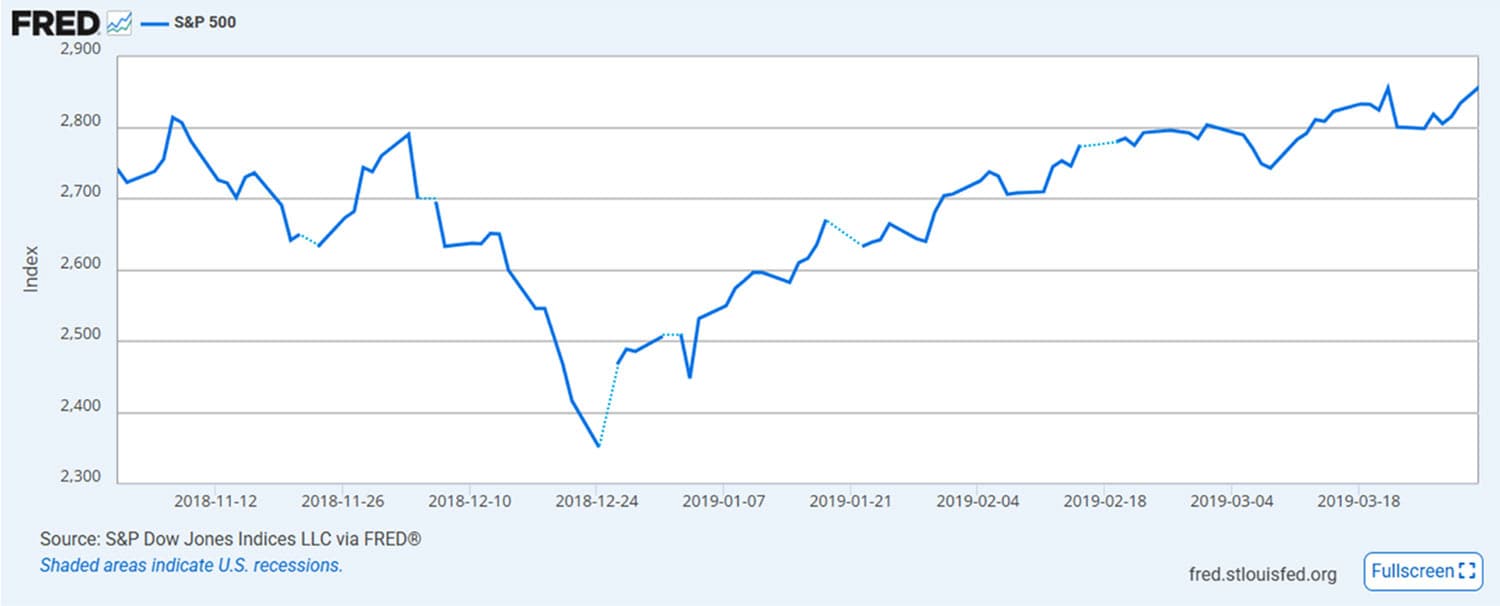
Stock prices may wobble in the early days if headlines rattle investor sentiment, but the volatility usually fades once it becomes clear that the government will reopen. In fact, shutdowns have often coincided with modest equity gains rather than losses. Since 1976, the S&P 500 has gained an average of 4.4% during shutdowns and stayed in positive territory through the last five.
During the 2018-2019 shutdown, for instance, the S&P 500 experienced a dip leading up to and shortly after the shutdown. But it rebounded within weeks.
Bond markets have told a similar story. Investors view them as a safe haven when uncertainty rises. On average, during past shutdowns, the 10-year Treasury yield has fallen about 2.2 basis points while prices have ticked higher, suggesting that demand for government bonds actually increases.
That said, repeated standoffs can chip away at confidence over time. If political brinkmanship becomes the norm, investors could start to worry less about each individual shutdown and more about what it implies: an erosion of fiscal discipline and predictability.
In short, markets typically look past government shutdowns.
What Does a Government Shutdown Mean for Your Portfolio?
For investors, government shutdowns normally generate more anxiety than actual damage. Markets dislike uncertainty, but history shows that shutdowns rarely change the long-term trajectory of portfolios.
Short-Term Volatility Is Normal
In the near term, stock prices may swing. But these dips tend to be short-lived. Once a funding deal is reached, markets have rebounded to date.
Fundamentals Don’t Disappear
Shutdowns aren’t economic crises. They don’t change corporate earnings, interest rates, or the economy’s underlying capacity for growth. Companies still operate and consumers still spend.
Some Areas Are Hit Harder Than Others
While the overall market impact is modest, some sectors feel the pinch more than others:
- Defense and contractors may face payment delays or paused projects.
- Travel and tourism can be hit by furloughed TSA and FAA staff or closed national parks.
- Small businesses relying on federal loans or grants might encounter funding gaps.
Staying the Course
For most investors, the best response is to avoid overreacting. Political standoffs make headlines, but they don’t rewrite investment principles. Maintaining diversification, keeping an adequate cash buffer for near-term needs, and staying aligned with long-term goals are still prudent strategies.
Related Articles

What are the markers of inflation, recession, and a healthy economy?
Economic Indicators,
Economics,
Top Economics FAQs,
September 5, 2024

What is the Yield Curve and what can it tell us about future economic growth, expected inflation, and the potential for a recession?
Economic Indicators,
Economics,
January 15, 2025

What Does the Market Hate? Uncertainty!
Markets,
March 25, 2025