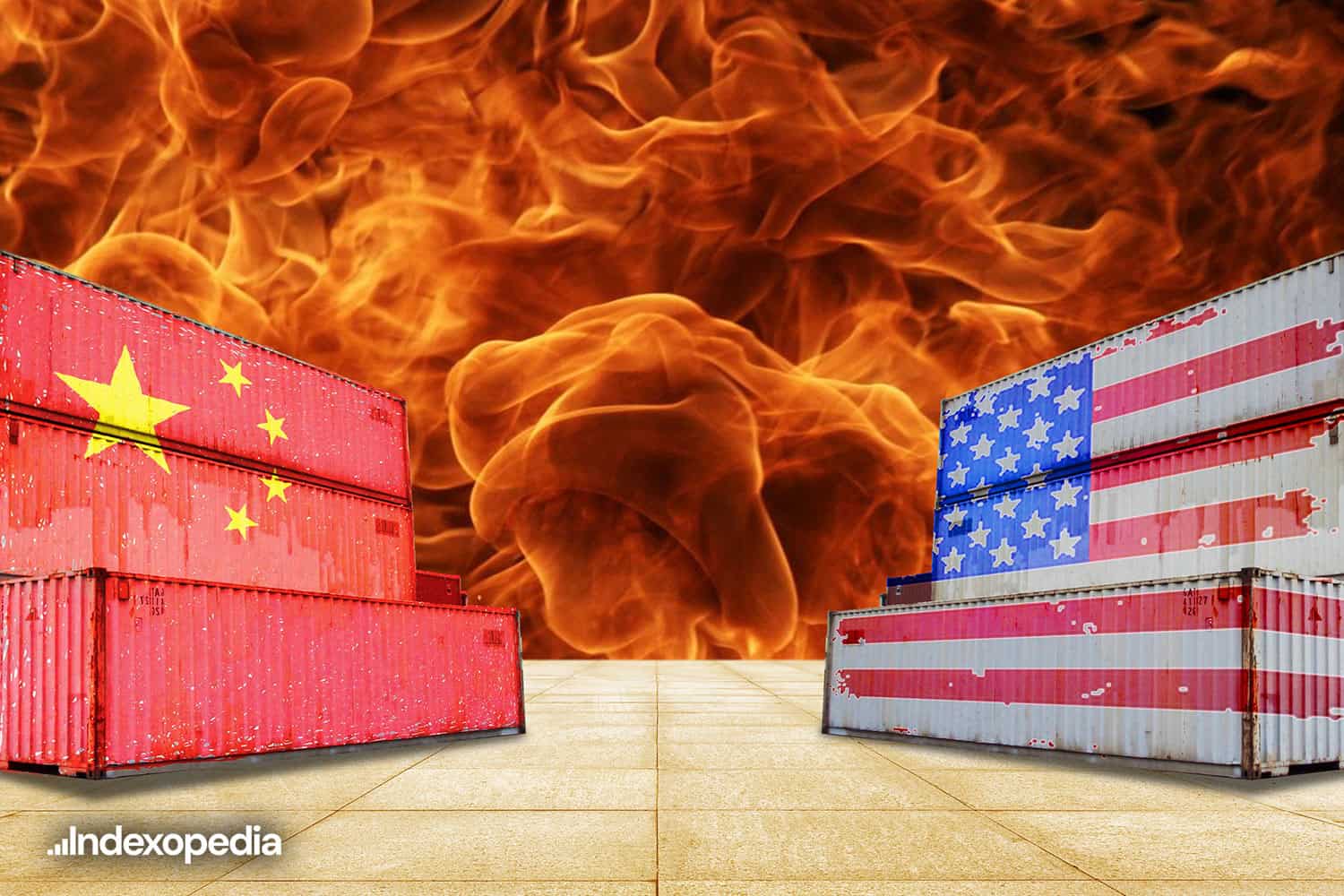


A trade war occurs when countries impose tariffs, quotas, or other trade restrictions on each other in response to disputes. These retaliatory measures aim to protect domestic industries but often escalate tensions and disrupt global markets. Often threats of tariffs or other trade restrictions are used to bring trade partners to the negotiating table.
How Trade Wars Start
Trade wars usually begin when a country perceives unfair trade practices, such as:
- Trade imbalances – One country imports far more than it exports to another.
- Subsidized industries – Governments provide financial aid to domestic companies, undercutting foreign competitors.
- Intellectual property theft – Companies or governments are accused of copying technology or patents without permission.
- Currency manipulation – Countries devalue their currency to make exports cheaper and imports more expensive.
To counter these issues, a government may impose tariffs (taxes on imported goods), quotas (limits on imports), or sanctions (restrictions on trade with specific companies or industries).
Consequences of a Trade War
While trade restrictions may offer short-term advantages, they often lead to economic consequences, including:
1. Higher Prices for Consumers
Tariffs make imported goods more expensive, causing price increases on everyday products like electronics, cars, and food. Domestic producers may also raise prices due to reduced competition.
2. Disruptions to Global Supply Chains
Many industries rely on international supply chains. Trade restrictions can delay shipments, increase costs, and force companies to find new suppliers, leading to inefficiencies.
3. Job Gains and Losses
Some domestic industries may benefit from reduced foreign competition, leading to job growth. However, industries reliant on exports or foreign materials may suffer, resulting in job losses.
4. Slower Economic Growth
Uncertainty and reduced international trade can weaken business investment, lower corporate profits, and slow economic expansion. Prolonged trade wars can trigger recessions.
5. Political and Diplomatic Tensions
Trade wars strain diplomatic relationships, making it harder for countries to cooperate on global issues such as security, climate change, and technology standards.
Examples of Trade Wars
- German-Polish Customs War – Post WWI Germany and Poland engaged in a trade war, with Germany seeking to gain political and territorial concessions through economic force. Poland, newly independent after more than a century of foreign dominance, refused to give ground and retaliated with tariffs on German goods. While both countries’ economies suffered, Poland was the hardest hit. While the trade war officially ended in 1934, Germany’s invasion of Poland in 1939 confirmed that the underlying issues remained.
- 1920s-1930s American Protectionism – In 1924 increased tariffs were signed into law by President Warren G. Harding, prompting trade partners like France, Spain, Germany, and Italy to increase their own tariffs. Many economists see this as a major contributing factor to the Great Depression. In 1930 President Herbert Hoover increased tariffs to their highest level in over 100 years. While this tariff bill was meant to protect American industries during the depression, it ended up exacerbating the economic issues the nation was facing.
- U.S.-China Trade War (2018-Present) – Under President Donald Trump the U.S. imposed tariffs on Chinese goods due to concerns over trade imbalances and intellectual property theft. China retaliated with its own tariffs, affecting industries from agriculture to technology. The Biden administration maintained the trade pressure on China, and as of writing the second Trump administration has increased tariffs on Chinese goods once again. This tit for tat of tariffs and counter-tariffs is viewed by many as an ongoing negotiation between the two global superpowers, with no immediate resolution in sight.
Can Trade Wars Be Avoided?
Governments often seek alternative solutions to prevent trade wars, including:
- Negotiations and Trade Agreements – Countries work to resolve disputes through diplomacy and trade deals (e.g., USMCA replacing NAFTA).
- World Trade Organization (WTO) Mediation – The WTO helps settle trade disputes and enforce international trade rules.
- Tariff Exemptions and Compromises – Countries may grant exemptions to certain industries or negotiate phased tariff reductions.
Final Thoughts
Trade wars are complex battles with far-reaching economic, political, and social consequences. While they may be intended to protect domestic interests, they often create unintended disruptions. Countries facing trade disputes must balance protectionism with the long-term benefits of open trade and global cooperation.