


For affluent investors seeking to enhance portfolio income without completely abandoning their core holdings, covered calls offer an appealing strategy. When executed properly, this options strategy can add a consistent stream of income while still allowing for potential capital appreciation–albeit with some trade-offs. Let’s break down how covered calls work, their risks, and how they can be integrated into a well-balanced portfolio.
What Is a Covered Call?
At its core, a covered call strategy involves two components:
- Owning shares of a stock outright – This is your long position in a company you believe in.
- Selling call options against those shares – This means you are agreeing to sell your stock at a predetermined price (the strike price) if the buyer of the call exercises their option.
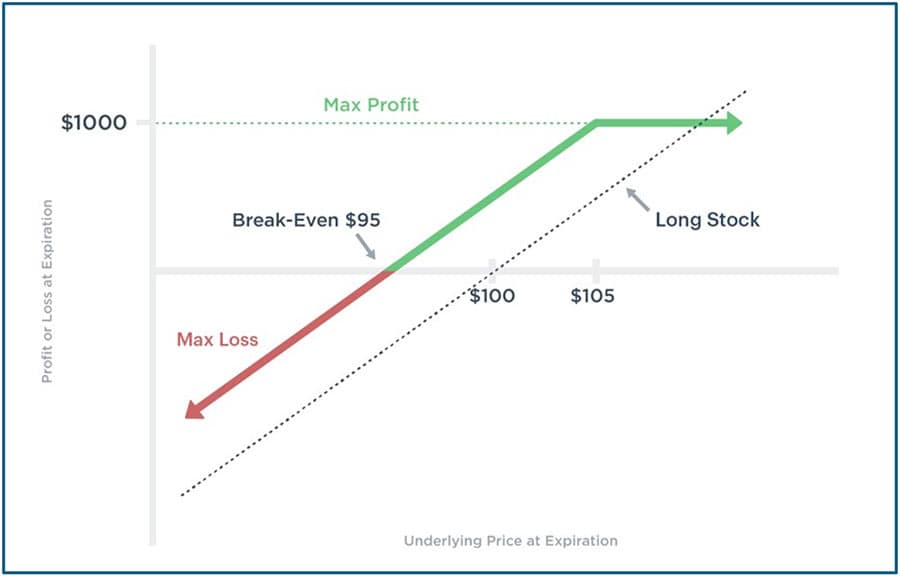
By selling the call option, you collect a premium upfront. If the stock stays below the strike price through expiration, the call expires worthless, and you keep both the stock and the premium. If the stock rises above the strike price, you may be forced to sell your shares at that agreed-upon level, missing out on further upside but still securing a profit.
Why Use Covered Calls?
Investors typically use covered calls to generate additional income, particularly when they believe their stock holdings will trade sideways or rise modestly. The premium collected acts as a buffer against minor declines in stock price and can provide a boost to overall portfolio returns.
Another reason an investor may want to incorporate a covered call strategy is when a particular holding has experienced significant capital appreciation which the investor wants to tap into, but without having to liquidate any of the position or incurring an equally significant tax liability. In that case, writing calls on their position offers the potential for generating additional income. Although this may still involve a taxable event (ie: income is taxed at the investor’s marginal tax rate), it allows the investor to retain his original position in the stock. Of course, there is always the possibility that the call option expires in-the-money (ie: the price of the stock exceeds the strike price of the option) and the investor gets called out of those shares. In that case, the investor has earned both a premium from selling the call, as well as experienced a capital gain. When this occurs, the investor is on the hook for a double tax bill – he will have to pay taxes on the income from the call premium he received, as well as on any realized capital gains from selling the underlying shares. So, to be clear, there are risks to this strategy.
For example, suppose you own 100 shares of a high-quality dividend stock trading at $100 per share. You sell a one-month call option with a $105 strike price and collect a $5 per share premium. If the stock remains below $105 by expiration, you keep both the premium ($500) and your shares. If the stock rises above $105, you may be forced to sell at that price, but you still earn the premium and the $5 per share gain, netting a total return of $10 per share.
The Trade-offs: Risks and Considerations
While covered calls can generate attractive income, they are not without their drawbacks:
- Limited Upside: The biggest risk is capping potential gains. If your stock surges well past the strike price, you may regret having sold the call, as you forfeit additional appreciation beyond that level.
- Stock Depreciation Risk: If the underlying stock declines significantly, the premium received helps offset losses but won’t eliminate them. This strategy works best in stable or moderately bullish markets.
- Tax Considerations: Covered calls can have tax implications, particularly if your stock is called away and you realize a taxable gain. Investors should consider tax-efficient accounts like IRAs for covered call strategies where applicable.
When Does a Covered Call Make Sense?
Covered calls are best suited for investors who:
- Own stocks they are comfortable holding for the long term.
- Believe the stock will trade within a range rather than experience sharp movements.
- Seek a way to boost income in low-yield environments without adding additional downside risk.
A Smart Approach: Selecting the Right Calls
The key to success with covered calls is selecting options with appropriate strike prices and expiration dates. Short-term calls (1-2 months out) are typically preferred, as they allow for more frequent premium collection and adjustment to changing market conditions. Strike prices should be set high enough to provide some capital appreciation but not so high that premiums become negligible.
Final Thoughts
Covered calls offer a practical way for affluent investors to monetize existing stock holdings without taking on additional downside risk beyond what they already hold in the underlying shares. While the strategy may not be suitable for every market environment, it can be a valuable tool in a diversified portfolio, particularly when the market is stable or slowly rising. As always, a thoughtful approach and disciplined execution will go a long way in making covered calls work to your advantage.
Related Articles