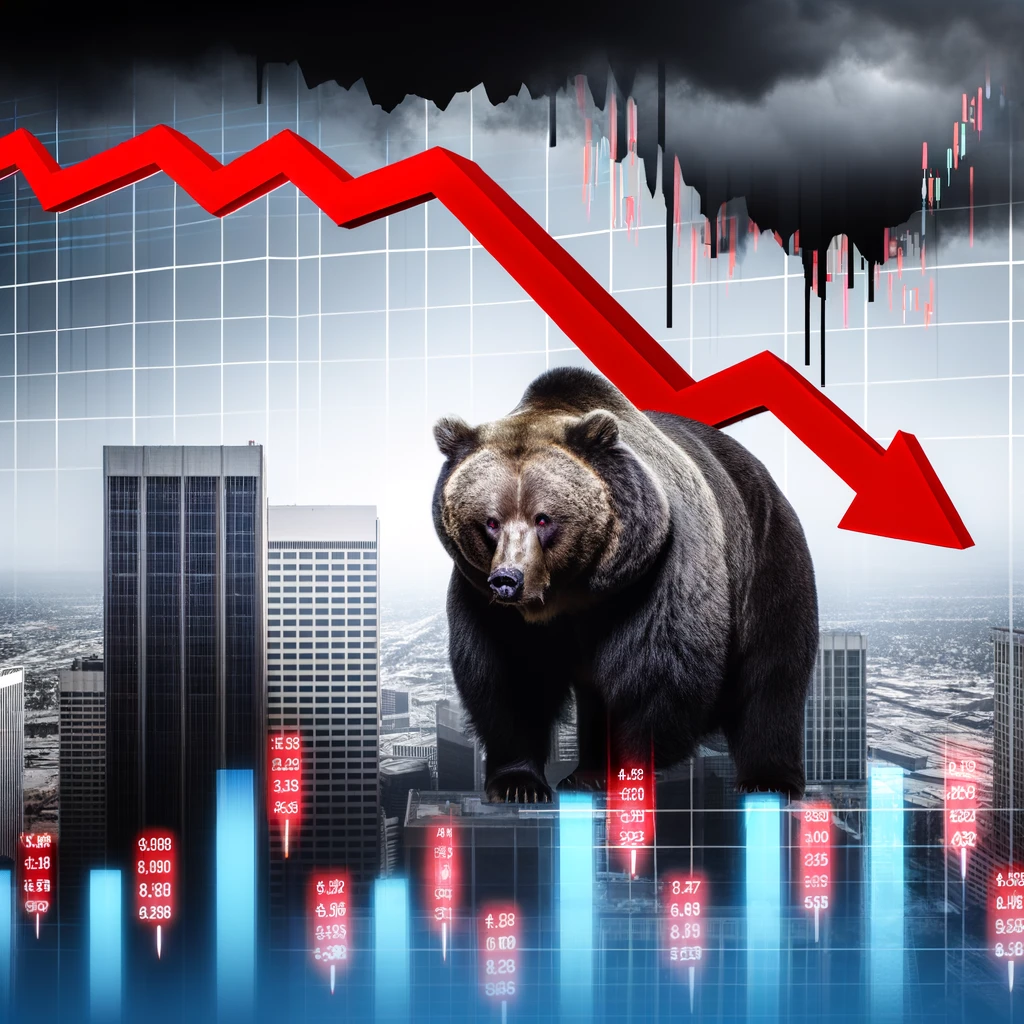


A bear market is a term used to describe a prolonged period of declining stock prices, typically characterized by investor pessimism, widespread selling, and negative economic indicators. During a bear market, investors generally have a negative outlook on the economy and are less likely to invest in stocks, which can result in a downward spiral of prices.
Bear markets occur when investors become concerned about the future prospects of the economy or a particular industry, causing them to sell their stocks and move their money into safer investments, such as bonds or cash. This selling pressure can cause prices to decline rapidly, leading to a bear market.
Historically, bear markets have occurred about once every three to five years, although the exact timing and duration can vary widely. Some bear markets have lasted only a few months, while others have persisted for several years. The severity of a bear market can also vary, with some resulting in relatively minor losses, while others can wipe out a significant portion of an investor’s portfolio.
Bear markets can be challenging for investors, as they can cause significant losses and erode the value of a portfolio. However, it’s important to remember that bear markets are a normal part of the market cycle and can also present buying opportunities for investors with a long-term perspective. During a bear market, stock prices can become undervalued, which can make them attractive to value investors who are looking for bargains.
In conclusion, a bear market is a prolonged period of declining stock prices that can occur about once every three to five years. The duration and severity of bear markets can vary widely, but they are a normal part of the market cycle. While they can be challenging for investors, they can also present buying opportunities for those with a long-term perspective.