


Flag of the British East India Company (1801)
Stock has become such a ubiquitous word in economic life, that often we forget that someone had to invent the concept. Stocks, or shares of ownership in a business, go back as far as the Roman Republic, but the history of modern stock is often traced back to the establishment of the English (later British) and Dutch East India Companies in the early 1600s. Partially state-owned, these companies were founded to bring resources from India and South-East Asia to Europe, either through trade or conquest.
Some of the first European colonies in North America were by joint ventures between the British government and private shareholders. Two notable examples of this are the Virginia and Massachusetts Bay companies. These state-sanctioned monopolies allowed investors to participate in the establishment and profits of colonial projects, with the British military protecting their investments from natives and other European powers. These companies later became colonies, then states.


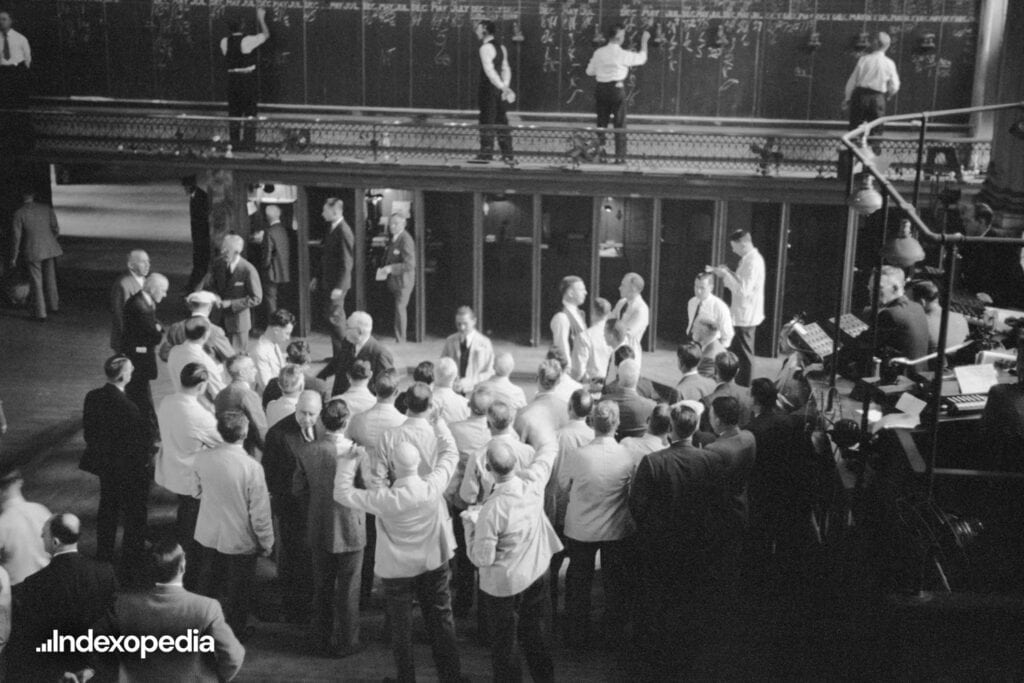
New York Stock Exchange 1882
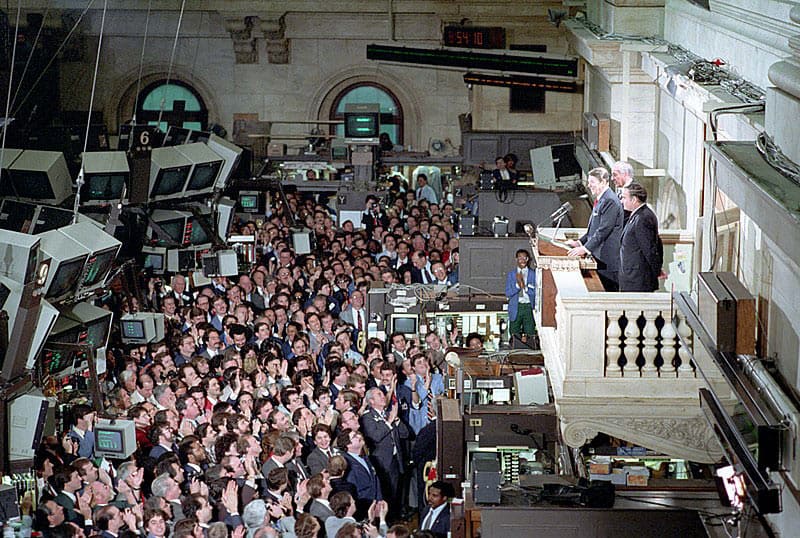
In the late 1700s, the Buttonwood Trade Agreement was signed by 24 merchants on Wall Street. Within 30 years this agreement evolved into the New York Stock and Exchange Board, the precursor of today’s New York Stock Exchange. As technology progressed through the industrial revolution and afterwards, the New York Stock Exchange became the preeminent exchange in the world. Exchanges like the NYSE connect buyers and sellers and facilitate exchange between them. The forces of supply and demand help markets establish fair prices.
Similar to a deed, stocks assign proportional ownership of a company to investors. By inviting multiple investors to fund a venture and assigning a specific percentage of ownership to each share, entrepreneurs are able to raise large amounts of capital for their projects. Not only does stock facilitate the funding of large projects, but it also spreads risk among multiple stakeholders. Instead of a single entrepreneur bearing all the risk of a venture, other investors can take on some of the risk in the hope of reaping some of the rewards.
Over the last 100 years or so, stocks have allowed everyday people to participate in the ownership of companies. Without stock, the average person would be unable to participate in ownership of a business. By dividing ownership across multiple shareholders, regular people have access to the profits (and the risks) of businesses across the world.
These exchanges also provide investors access to liquidity. Those who need to convert their investments to cash can do so relatively easily and at low cost, whereas the owner of a small restaurant, for example, could not.
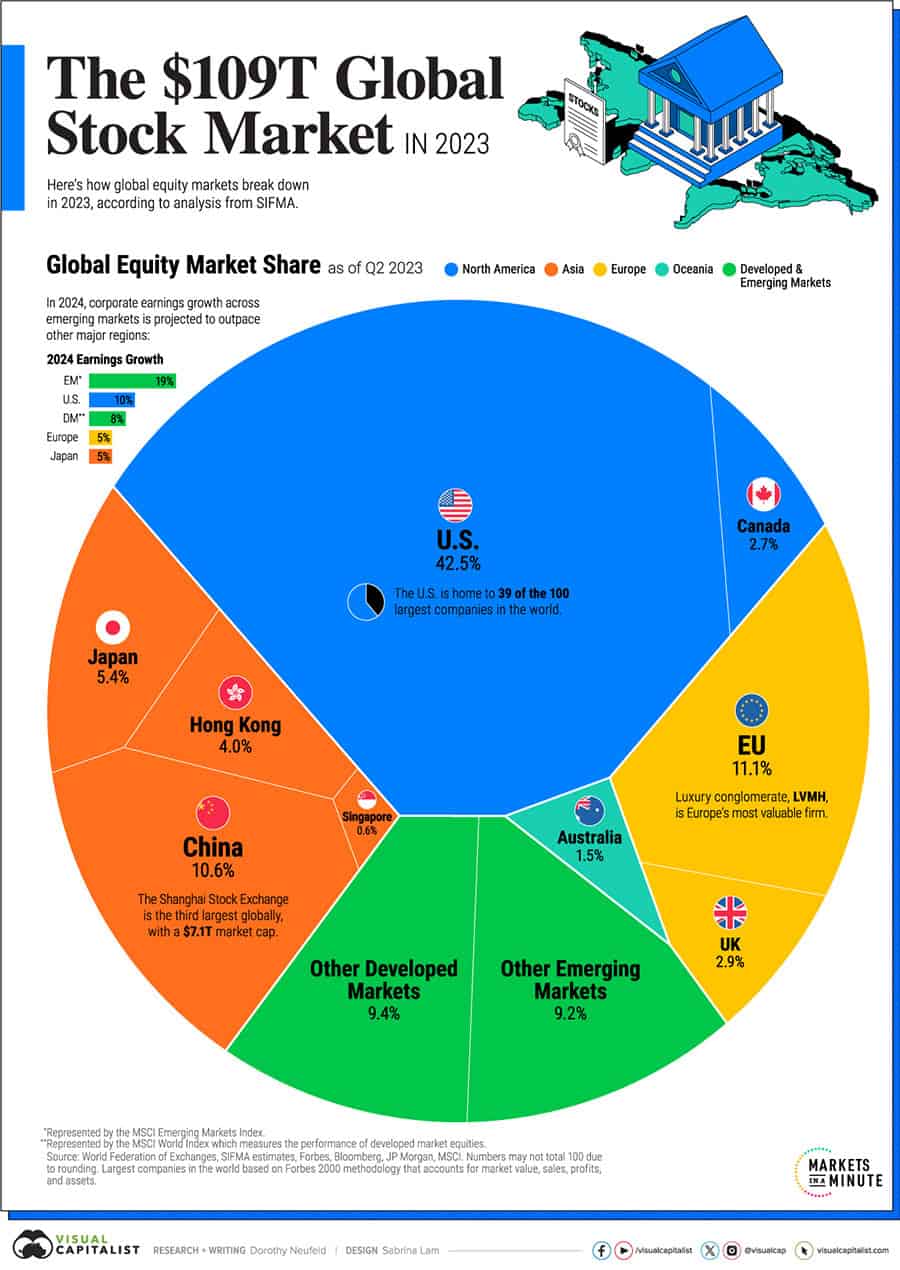
Today global equity (stock) markets add up to over $109 trillion, with the US making up around 40% of that total. Global equity markets continue to grow, giving stock investors more options and opportunities for investment. Stocks aren’t going away, and remain one of the most important components of building wealth:
The development of stocks has fundamentally reshaped economies and individual lives, opening doors to wealth creation and broadening access to economic opportunities that were once the domain of only the elite. By turning ownership into a fluid, tradeable commodity, stocks have helped democratized participation in business ventures, allowing people across social strata to contribute to and benefit from the success of enterprises worldwide. As the market continues to evolve, the underlying principles of shared ownership, risk distribution, and liquidity endure, reaffirming the indispensable role of stocks in modern financial life. This legacy, born from centuries of innovation, highlights the power of stocks not only as an economic tool but as a cornerstone of inclusive growth and prosperity.