

By Indexopedia Research Team | September 17, 2024 | In
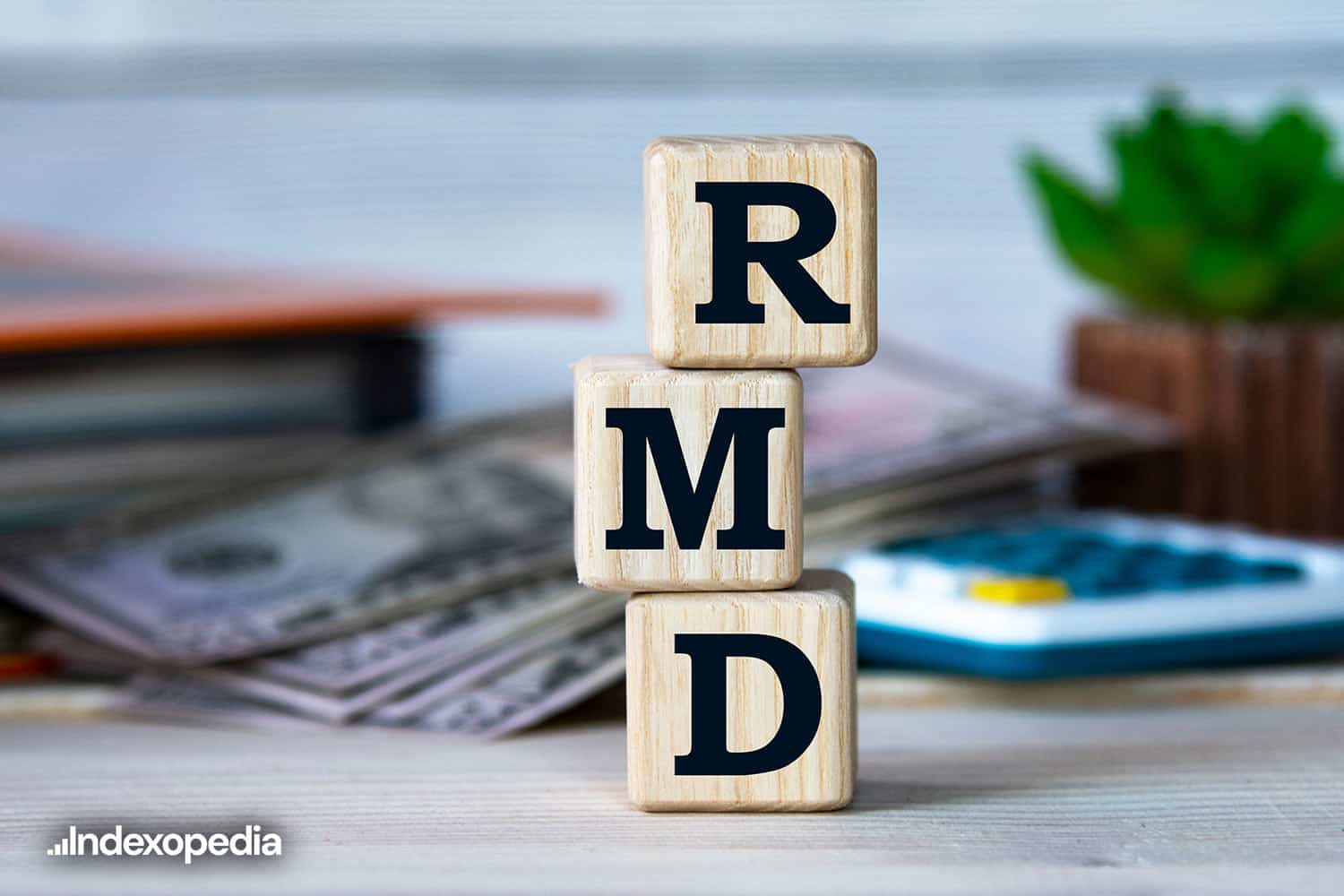
As retirement approaches, many investors face the important task of managing their retirement accounts, particularly their Individual Retirement Accounts (IRAs). One of the key challenges involves determining the optimal time to take Required Minimum Distributions (RMDs) from these accounts. The timing of RMDs can have significant tax implications and can affect the overall growth potential and sustainability of your retirement portfolio. In this article, we will explore the intricacies of RMDs, industry-accepted strategies, and key considerations to help you time your withdrawals. We will also examine five examples of market recoveries and what could have been lost if investors missed out on the early phases of these recoveries.
Understanding Required Minimum Distributions (RMDs)
RMDs are the minimum amounts that retirees must withdraw from their traditional IRAs and employer-sponsored retirement plans (such as 401(k)s) once they reach a certain age. The purpose of RMDs is to ensure that individuals eventually pay taxes on their tax-deferred retirement savings. The Internal Revenue Service (IRS) sets specific rules and guidelines for calculating and withdrawing RMDs which can be changed at any time without notice.
- Age Requirement: As of 2024, the age at which RMDs must begin is 73. If you reached age 73 in 2024 you must take your first RMD by April 1, 2025 and the second RMD by December 31, 2025. This age was recently increased from 72 by the SECURE Act 2.0, which passed in 2022. Starting in 2033, the RMD age will increase further to age 75.
- Calculation Method: The amount of each RMD is calculated using the IRS Uniform Lifetime Table, which provides a distribution period based on the retiree’s age. The RMD is determined by dividing the account balance as of December 31 of the previous year by the distribution period corresponding to the retiree’s age.
Example: If a retiree is 73 years old in 2024 and has an IRA balance of $500,000 as of December 31, 2023, their RMD would be calculated as follows:
- Find the Distribution Period: According to the IRS Uniform Lifetime Table, the distribution period for a 73-year-old is 26.5 years.
Calculate the RMD: $500,000 / 26.5 = $18,868. - The retiree would need to withdraw at least $18,868 from their IRA by December 31, 2024, to satisfy their RMD requirement. Please be aware there are a variety of online calculators, so you won’t need to do this calculation by hand.
The Importance of Timing Your RMDs
The timing of RMDs can significantly impact your financial situation. Withdrawing RMDs at the optimal time can help you manage your tax liability, maximize the growth potential of your retirement account, and help preserve your wealth over the long term.
1. Tax Implications of RMDs
One of the most critical factors to consider when timing RMDs is the tax impact. RMDs are taxed as ordinary income, meaning that the amount you withdraw is added to your taxable income for the year. This can push you into a higher tax bracket and increase your overall tax liability.
- Bunching RMDs: Some retirees may choose to take their first RMD in the year they turn 73 and delay it until April 1 of the following year. This allows them to “bunch” two RMDs into one tax year, potentially reducing their tax burden in the first year. However, this strategy must be used cautiously, as it can lead to a significant tax hit in the year of withdrawal.
Example: A retiree who turns 73 in 2024 might delay their first RMD until April 1, 2025, and then take their second RMD before December 31, 2025. While this strategy could reduce taxable income in 2024, it would result in a double RMD in 2025, which could push the retiree into a higher tax bracket.
The hidden benefit of this strategy applies to individuals who expect their income to drop in the following year, typically as a result of retirement. With a lower income, comes a lower tax bracket, so the strategy of taking no withdrawals in the first year and two withdrawals in the second year could provide an additional tax benefit to the individual.
Additionally, there could be considerations with regard to Medicare premiums. Since income is a component in the calculation of Medicare premiums, bunching RMDs could potentially allow an individual to avoid this by managing when income is recognized.
2. Market Conditions and Growth Potential
Another key consideration is the performance of the stock market and other investments within the IRA. By timing RMDs strategically, retirees can potentially benefit from market growth and maximize the value of their withdrawals.
- Withdrawing in a Down Market: If the market is down, retirees may want to consider delaying their RMDs (if possible) or withdrawing less than the required amount to allow the remaining assets to recover. Conversely, during strong market performance, taking RMDs early in the year might lock in gains.
Example: If the market experiences a significant downturn, such as the 2008 financial crisis or the COVID-19 crash in March 2020, a retiree might decide to delay their RMDs until the market shows signs of recovery. This approach could prevent selling assets at a low point, allowing more time for the investments to potentially regain value.
3. Cash Flow Needs
Retirees should also consider their cash flow needs when determining the timing of RMDs. While it’s important to meet the minimum withdrawal requirements, taking RMDs earlier in the year can provide liquidity for living expenses, large purchases, or unexpected costs.
- Matching RMDs with Expenses: Some retirees choose to align their RMDs with their cash flow needs, such as taking withdrawals in January to cover annual expenses or later in the year if they anticipate larger year-end expenses.
Example: A retiree who anticipates significant healthcare costs in December might plan to take their RMD in October or November, ensuring they have sufficient funds available to cover the expenses without disrupting their investment strategy earlier in the year.
Industry-Accepted Formulas and Maxims
There are several industry-accepted formulas and maxims that can help retirees determine the optimal timing for their RMDs:
- The “Two-Thirds Rule”: Some financial advisors recommend withdrawing RMDs in two installments–two-thirds early in the year and the remaining one-third later. This approach balances tax planning, cash flow needs, and market considerations.
- “Sell High, Delay Low”: This maxim suggests taking RMDs early when the market is high and delaying when the market is low, allowing more time for investments to recover.
- “Bunch and Delay”: As previously mentioned, this strategy involves delaying the first RMD until the following year to bunch withdrawals into one tax year, potentially lowering the overall tax burden.
The Impact of Missing Market Recoveries
 Missing out on the early phases of a market recovery can have a significant impact on your IRA’s overall value. To illustrate this point, let’s examine five examples of recent market recoveries and the potential consequences of withdrawing RMDs before these recoveries took place.
1. The 2009 Recovery After the Financial Crisis
The S&P 500 reached its lowest point on March 9, 2009 during the global financial crisis. From this low, the market began a robust recovery with the S&P 500 increasing by over 300% over the next decade. If a retiree had taken their RMD in early 2009, they might have sold investments at a significant loss, missing out on the substantial gains that followed.
Impact of Missing the Recovery: A retiree who sold their stocks in March 2009 would have missed out on one of the most significant bull markets in history. The lost growth opportunity could have drastically reduced the long-term value of their IRA.
2. The 2012 Recovery from the Eurozone Crisis
The Eurozone debt crisis led to significant market volatility in 2011 and early 2012. However, by mid-2012, markets began to stabilize and recover. The S&P 500 saw strong performance, with an annual return of around 16% from 2012 to 2014.
Impact of Missing the Recovery: Taking an RMD during the height of the Eurozone crisis might have meant selling assets at a depressed value, missing out on the subsequent recovery and strong returns in the following years.
3. The 2016 Recovery Post-Brexit Vote
In June 2016, the UK’s Brexit vote led to market uncertainty and a brief downturn. However, the market quickly rebounded, and the S&P 500 continued its upward trend, achieving double-digit returns by the end of the year.
Impact of Missing the Recovery: An investor who took their RMD immediately after the Brexit vote could have missed out on the rapid recovery and the gains that followed, reducing the potential growth of their retirement portfolio.
4. The 2019 Recovery After the Trade War Concerns
In 2018, concerns over the US-China trade war led to market volatility and a sharp correction in December. However, the market rebounded strongly in 2019, with the S&P 500 delivering a 31.5% return for the year.
Impact of Missing the Recovery: Selling investments during the December 2018 downturn to meet RMD requirements would have meant locking in losses just before a significant recovery, potentially reducing the long-term value of the portfolio.
5. The 2020 Recovery from the COVID-19 Crash
The COVID-19 pandemic caused a dramatic market crash in March 2020, with the S&P 500 dropping by over 30% in just a few weeks. However, the market quickly rebounded, and by the end of 2020, the S&P 500 had recovered and achieved a positive return for the year.
Impact of Missing the Recovery: An investor who withdrew their RMD in March 2020 would have sold investments at the market’s lowest point, missing out on the rapid recovery and the gains that followed throughout the rest of the year.
Conclusion
The timing of Required Minimum Distributions is a critical decision that can significantly impact your financial future. By carefully considering factors such as tax implications, market conditions, and cash flow needs, you can optimize the timing of your withdrawals.
Related Articles
Required Minimum Distribution
Personal Finance,
Tax,
November 3, 2023

Why is Income Important in Retirement?
Fixed Income,
Personal Finance,
Top Personal Finance FAQs,
Why to Buy & Where,
August 14, 2024

When should I start taking Social Security?
Financial Planning,
Personal Finance,
Top Personal Finance FAQs,
July 24, 2024