



How do you know if your portfolio is efficient and what impact it could have on results?
Why Efficiency Matters
When you ask most investors what impacts portfolio results the most, most will say cost. While cost is important—and yes, high costs can hurt results—what many investors fail to realize is that portfolio inefficiency and investor behavior can actually hurt results more than cost (unless we’re talking about abnormally high costs).
Before diving into what an efficient portfolio looks like—or doesn’t look like—let’s see how a 3% difference in portfolio results can impact a lifetime.
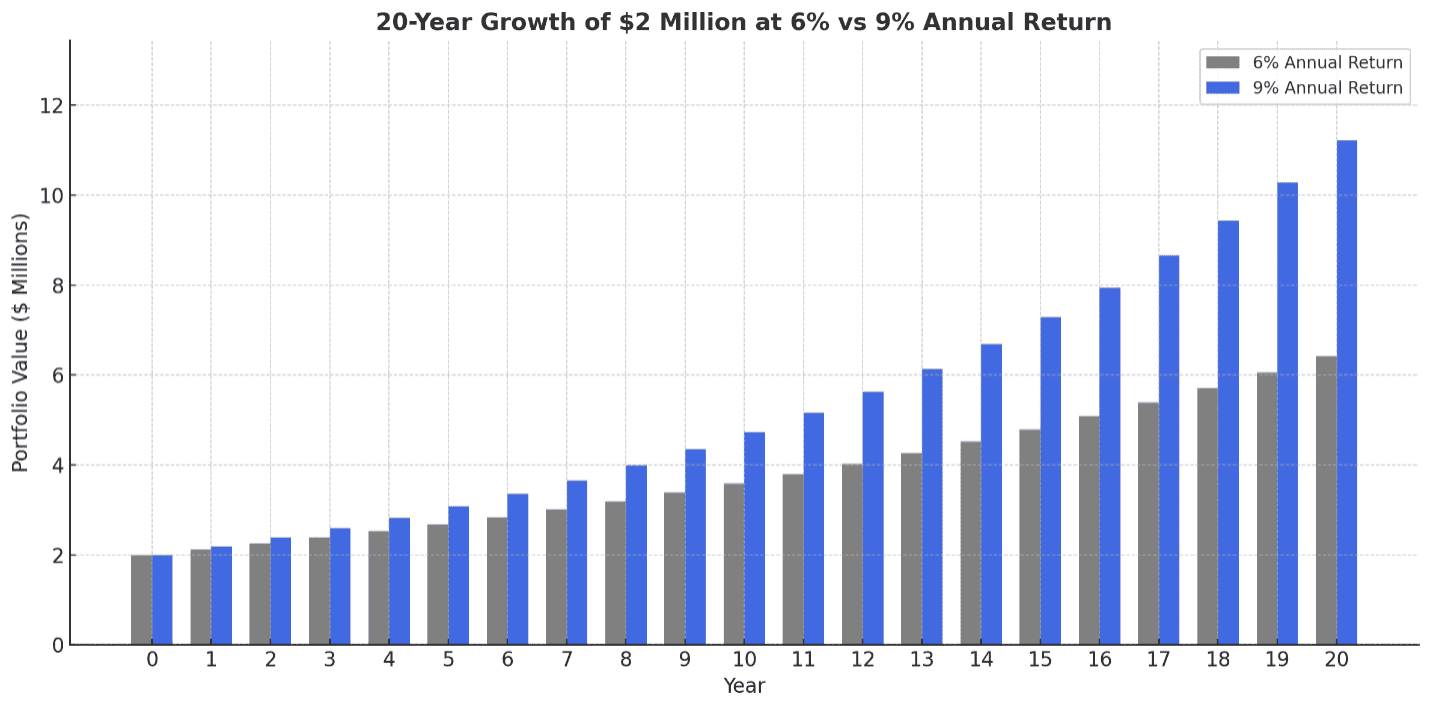
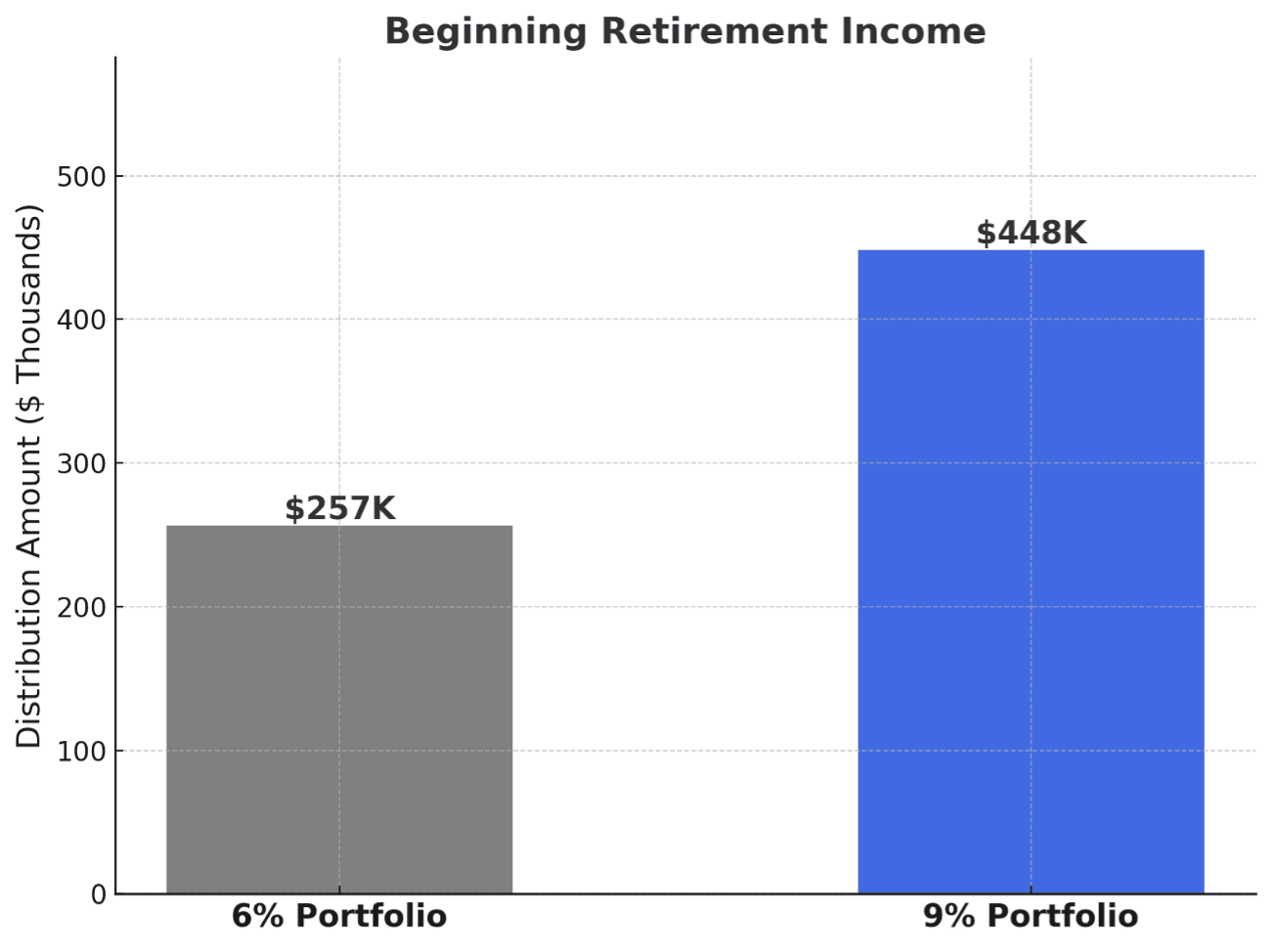
As you can see, while a 3% difference may not seem huge in one year, over 20 years the lost compounding impact is significant. Now imagine you unfortunately had an inefficient portfolio for 20 years, and you’re now retired. You begin drawing 4% annually from your portfolio. Let’s look at the retirement impact due to lost compounding during those first 20 years, now extended for another 20.
The S&P 500 Index is an unmanaged securities index that is used as a general measure of market performance, and its performance is not reflective of the performance of any specific investment. The Third‐party Index comparison is provided for informational purposes only and should not be used as the basis for making an investment decision. Further, the performance of a Model Index and each Third‐party Index may not be comparable. There may be significant differences between a LT Index and each Third‐party Index, including, but not limited to, risk profile, liquidity, volatility, and asset comparison. Investments cannot be made directly into a Third‐party Index.
As you can see, the impact on take-home income at retirement is not just significant—it can bring tears to your eyes.
So, what could you do about this? First, determine if your portfolio is built efficiently. If it’s not, find someone who can build one that is. Too often investors build portfolios based on what makes them feel good, or on only a few surface-level facts. Even more challenging, investors often choose an advisor based on personality, not qualification. Charisma is not a reason to hire an advisor.
The truth is: investment firms and advisors are not all created equal. They don’t all work or sing from the same hymnal. It’s important to dig deeper into their skill set, firm license and ownership, and whether they sell products or build portfolios directly.
With that in mind, here are the 6 qualities of an efficient portfolio.
1. Earnings Quality of Holdings
Every portfolio is made up of holdings—both equities and bonds. The long-term returns of these holdings are a direct correlation to the quality of earnings. Companies with poor or no earnings may go up for short periods, but they eventually fail.
Unfortunately, very few advisors have a team of analysts who evaluate company earnings in depth. Too often they rely on third-party mutual funds or passive index products that aren’t actively screened for earnings quality. This passive approach impacts both upside returns and down-market recovery.
That’s why the Indexperts team builds each index around earnings quality—to help ensure long-term results.
Portfolio results are driven by three factors:
- Quality of holdings
- Ownership of holdings
- Cost
2. Tailored
Too often investors focus on what they want, not what they need. Much like eating donuts—we want them, they taste good, but later we pay the price. Investing is much the same.
Advisors sell returns with cookie-cutter models. That means the investor is constantly moving in and out based on what looks good now, not what will serve them in the future.
If a portfolio is truly built around an investor’s growth, income, and risk needs, then you’re not just buying donuts—you’re investing in a plan that can meet your long-term goals. When the market goes up or down, you know your portfolio is tailored to your expectations.
This is why the Indexperts team builds portfolios directly around each investor’s individual needs. Over time, this means investors can rest knowing their portfolio is doing exactly what it was built to do.
3. Complementing Sectors
Sectors rotate in and out of favor. That’s why efficient portfolios are built so that when one asset class moves out of favor, others can help offset the impact.
A portfolio that is too concentrated in one sector not only risks its value, it casts a shadow over the entire portfolio’s results. This is why our team designs indexes with complementing and inverse relationships—to help balance sector rotation and thus long-term results.
4. Ownership
Direct ownership matters. In pooled products like mutual funds and ETFs, investors don’t actually own the underlying securities—they own a share of the fund. This comes with hidden costs, lack of transparency, and tax disadvantages.
With direct ownership, you can:
- See exactly what you own
- Control tax-loss harvesting or gifting appreciated shares
- Avoid being impacted by small investors moving in and out of a fund
- Retain proxy voting rights on important company matters
For the up-and-coming affluent who may not have yet accumulated adequate assets for a direct ownership portfolio, ETFs are the next best option—which is why we built the lineup of Indexperts ETFs.
An efficient portfolio isn’t just about what you hold—it’s about how you hold it. Direct ownership gives you efficiency, control, and transparency.
5. Control
Control is more than ownership—it’s the ability to manage the portfolio to your advantage. With pooled products, you’re hostage to the behavior of others. But with institutional indexing, you’re in control:
- Taxes: Harvest losses, gift appreciated shares, manage gains
- Transparency: Know the exact cost basis and holdings
- Customization: Exclude sectors or companies you don’t want
- Risk posture: Adjust holdings without being tied to a pooled vehicle
Affluent investors deserve control. Efficient portfolios are built to give it back to them.
6. Yield (Net Cash Flow)
Return isn’t just about price appreciation—it’s also about cash flow. Yield provides steady, tangible dollars that can be reinvested or used for living needs.
Bonds, for example, often provide coupons that can offset withdrawals during down markets, reducing the harmful effects of negative compounding. Likewise, dividend-paying equities provide net cash flow that supports compounding even when markets are volatile.
An efficient portfolio ensures that yield and net cash flow are thoughtfully built in—providing stability, funding distributions, and enhancing compounding over time.
Summary: Why Efficiency Matters
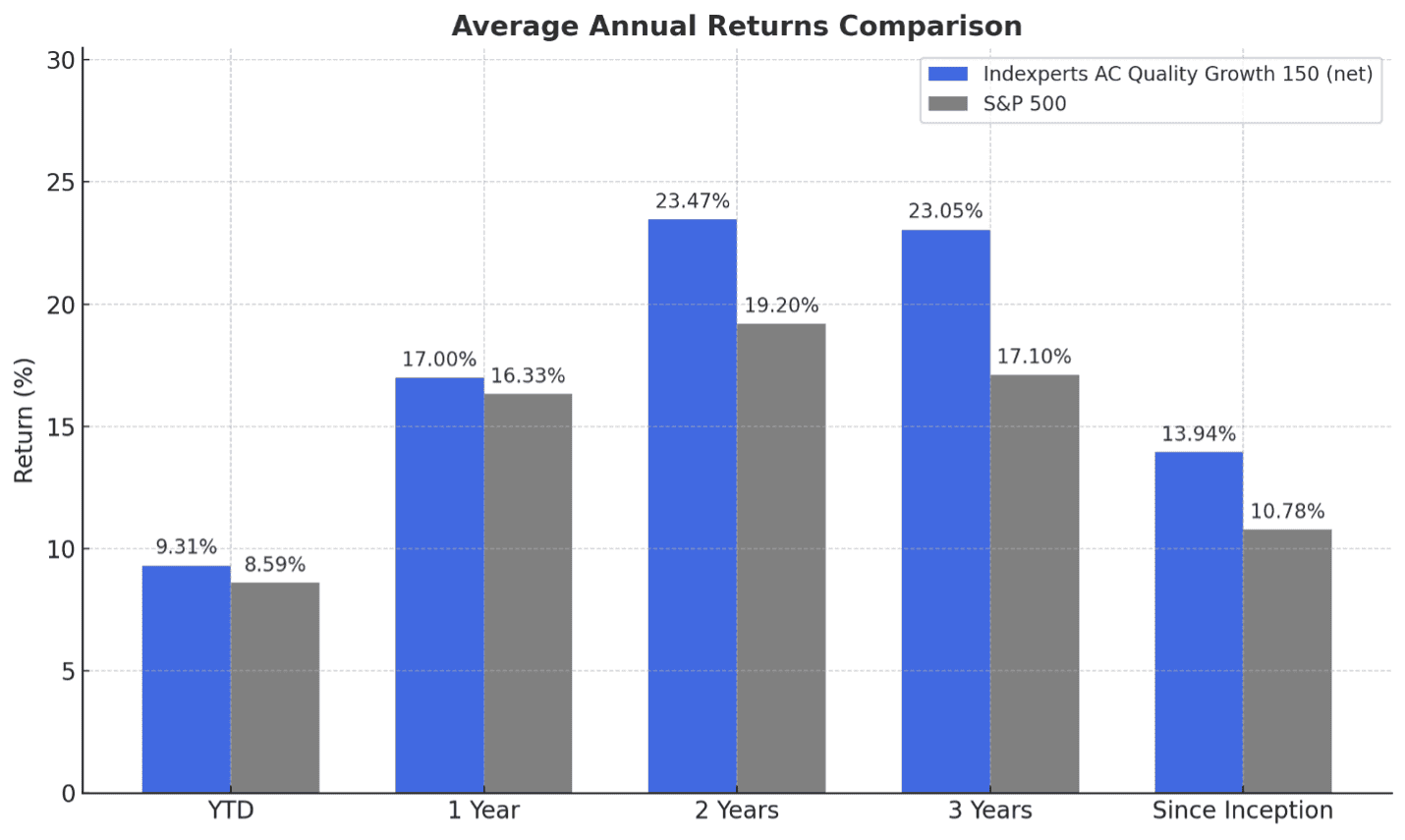
The data makes the case clear—small differences in portfolio design compound into life-changing results. A 3% annual gap doesn’t just look better on paper; over decades it can translate into millions more in retirement income. The Indexperts AC Quality Growth 150 (net) shows how a focus on earnings quality, direct ownership, and efficiency can outperform traditional benchmarks like the S&P 500.
An efficient portfolio isn’t about chasing headlines or yesterday’s winners—it’s about building on the fundamentals that matter most:
- Quality of holdings
- Tailored construction
- Complementing sectors
- Ownership and control
- Net yield and cost efficiency
In short, results have a direct correlation to efficiency. It isn’t just a philosophy—it’s a discipline that we’ve proven over more than 36 years in the business. For investors, the difference is not simply about higher returns, it’s about a smoother ride up to and through retirement.
Related Articles
4 Critical Impacts of an Inefficient Portfolio
Investment Principles,
Portfolio Considerations,
January 8, 2025

What Does Your Portfolio and an Onion Have in Common?
Financial Planning,
Personal Finance,
October 1, 2024

Institutional Indexing is Built for the Individual, Retail Indexing is Built for the Institution
Index Investing,
Indexing for the Affluent,
November 19, 2024