



We view markets as having three distinct phases: Ups, Downs, and Recoveries. Down markets are an inevitable part of investing, yet they often spark fear and uncertainty, especially among affluent investors who have spent decades building their wealth. While no investor enjoys seeing their portfolio decline, understanding the typical phases of a down-market and how different investment strategies perform during these periods can help investors stay the course and make informed decisions.
The Phases of a Down-Market
Historically, bear markets tend to follow a predictable sequence of events. While no two downturns are identical, recognizing these phases can help investors maintain perspective and avoid panic-driven decisions.
1. The Early Decline: Denial and Complacency
At the start of a down-market, many investors dismiss the warning signs, attributing declines to temporary factors. Optimism remains high, and many market participants see the dip as a buying opportunity. However, as negative data mounts – whether it’s deteriorating corporate earnings, tightening monetary policy, or geopolitical instability – the downturn accelerates.
2. The Panic Sell-Off: Fear Takes Hold
As losses pile up, investor sentiment shifts from optimism to fear. This phase often features sharp sell-offs, increased volatility, and a rush to safe-haven assets like Treasuries and gold. The financial media amplifies the panic, further exacerbating investor anxiety. Many who bought in earlier are now looking for an exit, often selling at a loss.
3. The Dead Cat Bounce: A False Sense of Recovery
A common feature of prolonged bear markets is the “dead cat bounce” – a temporary rally that gives the illusion that the worst is over. These short-lived recoveries can be misleading, as they often result from bargain-hunting or short-covering rather than genuine improvements in economic fundamentals. Investors who prematurely jump back in during this phase risk further losses when the market resumes its downward trajectory.
4. Capitulation: The Emotional Bottom
The final stage of a bear market is capitulation – the moment when even long-term investors throw in the towel. This phase is marked by widespread pessimism, massive outflows from equities, and steep declines in stock prices. At this point, valuations often become attractive, but few are willing to buy due to the prevailing negative sentiment. Historically, capitulation has been a precursor to market bottoms and eventual recoveries, but timing this inflection point is notoriously difficult.
5. Recovery and Rebuilding Confidence
After capitulation, the market gradually stabilizes. Economic indicators begin to improve, corporate earnings recover, and investor confidence slowly returns. Those who stayed invested through the downturn often see their portfolios recover, while those who sold at the bottom struggle to re-enter at the right time.
How Different Portfolios Fare in a Down-Market
Down-market capture is a key metric that helps investors understand how their portfolio fares relative to the broader market during downturns. A defensive portfolio – typically consisting of high-quality bonds, dividend-paying stocks, and other low-volatility assets – tends to capture less of the market’s downside, softening the blow when stocks decline. Conversely, an aggressive portfolio, which leans heavily on growth stocks and other high-risk assets, often experiences steeper losses during a downturn. Ultra-conservative portfolios, primarily composed of cash, short-term bonds, and other low-yielding safe-haven assets, may avoid losses altogether but at the cost of minimal growth potential. Understanding where your portfolio falls on this spectrum can help set expectations and ensure that your investment strategy aligns with your long-term financial goals (see Exhibit 1 below).
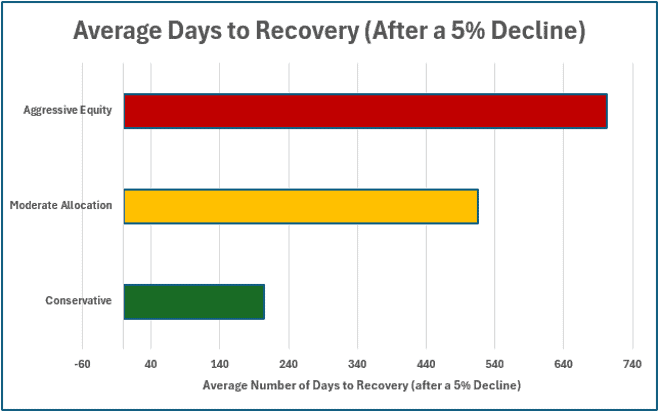
Exhibit 1 (Source: Zephyr. Moderate Allocation: 30% S&P 500, 40% Bloomberg US Aggregate Bond Index, 30% Dow U.S Select Dividend; Aggressive Allocation: 40% S&P 500, 30% NASDAQ 100, 15% Russell Mid Cap, 15% Russell 2000; Ultra Conservative: 100% Bloomberg US Aggregate Bond Index)
What Should Investors Do?
1. Stay Invested – Avoid Emotional Decisions
One of the most damaging mistakes investors make during downturns is panic selling. History has repeatedly shown that missing the best recovery days can significantly hurt long-term returns. Selling near the bottom locks in losses and makes it difficult to reinvest at the right time.
2. Focus on Quality
During downturns, investors tend to favor high-quality companies with strong balance sheets, consistent cash flow, and stable earnings. Defensive sectors such as healthcare, consumer staples, and utilities often outperform the broader market when uncertainty is high. In addition, companies with poor earnings quality are often punished.
3. Spread your Risk
A well-diversified portfolio – spread between asset classes and sectors – can help cushion the impact of a downturn. Bonds, particularly high-quality fixed income, often provide stability when equities are under pressure.
4. Consider Tactical Rebalancing
Rather than reacting emotionally, disciplined investors use downturns as opportunities to rebalance their portfolios. If equities have declined significantly, rebalancing may involve buying quality stocks at discounted prices while trimming overexposed areas.
5. Work With a Trusted Advisor
Market downturns can test even the most seasoned investors. Having a well-thought-out investment plan – and working with a trusted wealth manager – can provide clarity and confidence during turbulent times.
Final Thoughts
Downturns are a natural part of the market, just like upturns, as illustrated by the concept of a two-sided coin (link). When investing, it is important not to be influenced by hype or fear, which are often an investor’s worst enemies. Investors should view down markets as a normal part of the full market cycle and allocate their portfolios with downturns in mind. It is not a matter of if they will happen, but when.
A well-balanced portfolio that includes high-quality stocks from different sectors and bonds can help stabilize the overall impact of a market downturn. Over time, this diversification not only mitigates losses but also enhances recovery, which is crucial for restoring the power of compounding.
Down markets can be an investor’s ally if behavior, balance, quality, and time are incorporated into their investment strategy.
Related Articles

The Elephant in the Room: Why Bonds are Still a Good Investment Even When the Stock Market is Rallying
Markets,
July 28, 2025

Breakeven Price
Markets,
Top Markets FAQs,
November 2, 2023

Building a portfolio with a correction in mind vs timing the correction
Investment Principles,
Markets,
Portfolio Considerations,
October 1, 2024