



By Indexopedia Research Team | August 12, 2024 | In
A market correction is a term used in finance to describe a temporary drop in the stock market or a specific asset class. It is a natural part of the market cycle and can occur for a variety of reasons, including economic, geopolitical, or simply investor sentiment. Market corrections are typically defined as a decline of 10% or more from recent highs and can be seen as a healthy remedy to dampen excessive market exuberance or, more ominously, as a precursor to a more severe downturn.
As an investor, understanding market corrections and how they can affect your portfolio is crucial for managing risk and making informed investment decisions. And avoiding the most common mistakes may be the key to long-term portfolio pain. Two of the most cited mistakes are bad investor behavior and having a portfolio that’s inefficient.
What are the Primary Causes of a Market Correction?
Market corrections can be triggered by a variety of factors, including economic data releases, geopolitical events, or changes in investor sentiment. One common cause of market corrections is a change in interest rates by the Federal Reserve. If the Fed decides to raise interest rates, it can have a negative impact on the stock market as borrowing costs increase for businesses and consumers. This can lead to a decrease in spending and investment, which can ultimately affect corporate earnings and stock prices.
Another factor that can trigger a market correction is a sudden shift in investor sentiment. If investors become overly optimistic about the market and start buying stocks at inflated prices, it can create a bubble that eventually bursts. When this happens, investors rush to sell their holdings, leading to a sharp decline in prices.
Geopolitical events can also play a role in triggering market corrections. Events such as wars, terrorist attacks, or trade disputes can create uncertainty in the market and cause investors to sell off their holdings in search of safer assets.
How Does a Market Correction Affect Investors?
Market corrections can have a significant impact on investors, depending on their investment strategy and risk tolerance. For long-term investors who are diversified and have a well-balanced portfolio, market corrections can be seen as a buying opportunity to add to their positions at lower prices. However, for investors who are heavily invested in a particular sector or asset class, a market correction can lead to significant losses.
 One of the biggest risks of a market correction is the potential for panic selling. When investors see their portfolios decline in value, they may be tempted to sell their holdings in a panic, locking in losses and missing out on potential gains when the market eventually recovers.
Market corrections can also have an impact on the broader economy. When stock prices decline, consumer confidence can wane, leading to a decrease in spending and investment. This can have a ripple effect on businesses, leading to lower profits and potential layoffs. However, market corrections are a natural part of the market cycle and can help to prevent excessive speculation and asset bubbles from forming.
Notable Market Corrections
1. The COVID-19 Pandemic
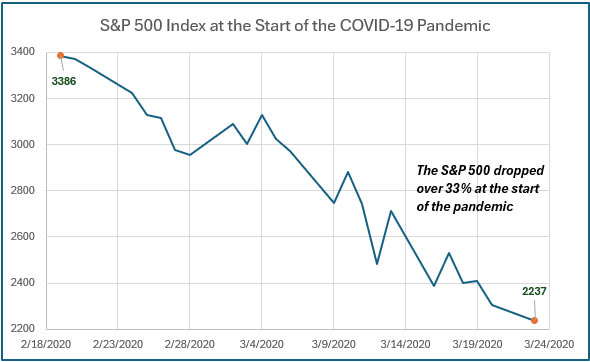
The COVID-19 pandemic triggered a swift and severe market correction in early 2020 as global economic activity came to a near halt due to widespread lockdowns and uncertainty. The correction began in late February 2020 and lasted until late March 2020. The S&P 500 dropped by approximately 34% from its peak on February 19, 2020, to its low on March 23, 2020 (see Exhibit 1). The markets rebounded quickly due to unprecedented fiscal and monetary stimulus. By August 2020, the S&P 500 had recovered all its losses and hit new highs. The fear of a global recession due to the pandemic, widespread lockdowns, and the abrupt stop in economic activity were the primary drivers. The recovery was fueled by aggressive monetary policy measures, such as interest rate cuts and massive asset purchases by central banks, as well as fiscal stimulus packages.
Exhibit 1 (source: Factset)
2. The Correction of 2022
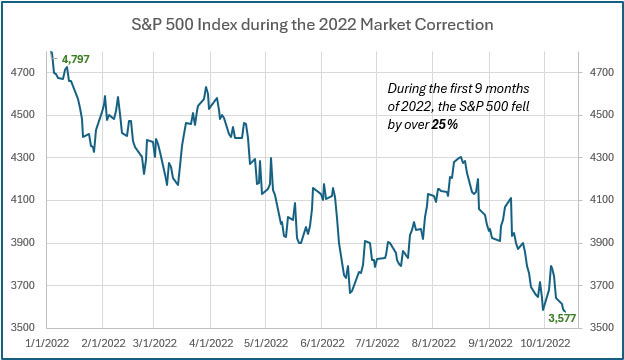
In 2022, the stock market experienced a decline of nearly 20%, largely driven by rising inflation, tightening monetary policy (The Federal Reserve implemented multiple rate hikes, including a 0.75% increase in June of 2022, the largest since 1994), geopolitical tensions (particularly the Russia-Ukraine conflict), and economic uncertainty centered around fears of a recession. The correction began early in the year and persisted for several months. The S&P 500 index declined by almost 25% from its peak in January 2022 to its trough in October 2022, officially entering bear market territory. The tech-heavy NASDAQ Composite index faced more severe losses, declining by approximately 30% over the same period. By the end of the year, however, markets were showing signs of stabilization. While the path to full recovery remained uncertain, the correction of 2022 underscored the importance of monitoring macroeconomic developments and central bank policies.
Exhibit 2 (source: Factset)
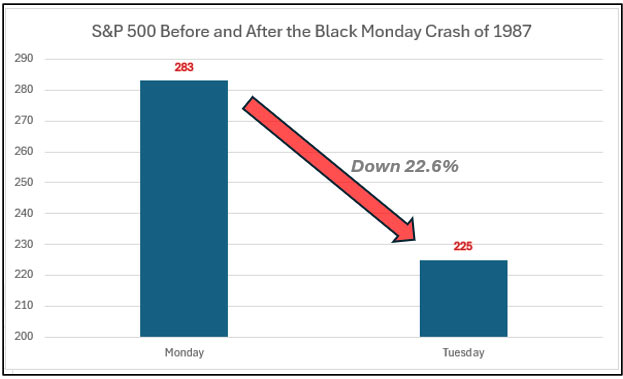
Another well-known market correction was known as Black Monday, which refers to the market crash that occurred on October 19, 1987, when stock markets around the world collapsed in a very short period. The crash occurred on a single day, October 19, 1987.The Dow Jones Industrial Average (DJIA) plummeted by 22.6% in one day (see exhibit 3), marking the largest single-day percentage decline in history. The markets began to recover relatively quickly. By early 1988, the DJIA had regained much of its lost ground. Factors contributing to the crash included computerized trading, illiquidity, and overvaluation. The subsequent recovery was supported by central banks’ intervention and monetary easing.
Exhibit 3 (source: Factset)
How Can Investors Best Prepare for a Market Correction?
1. Construct the portfolio around your risk tolerance and return preferences:
You should also assess your desire for both growth and income and compare that with a long-term perspective. You should always build your portfolio with the understanding that down markets will happen. Unfortunately, most investors and retail investment advisors seldom consider down markets in their narrative. “It is not a matter of IF you will have a down market, it is a matter of WHEN.” Not considering a down market when building a portfolio is like only considering one side of a nickel and expecting it to land on heads every time. Like all coins, nickels have two sides just like markets have two sides – rallies and pull backs. So when building a portfolio, conventional says down markets need to be considered.
2. Diversify Your Portfolio:
Diversification is one of the best ways to manage risk in your portfolio. By spreading your investments across different asset classes and sectors, you can reduce the impact of a market correction on your overall portfolio. Be especially mindful if you are invested in pooled market cap index funds. These investment vehicles often lead to an overconcentration in a handful of names and can leave investors exposed to sharp declines, particularly during periods of market stress, such as a correction.
How Can Investors Best Navigate Through a Market Correction?
Navigating through a market correction as an investor requires a combination of discipline, patience, and a well-thought-out investment strategy. Here are some tips to help you navigate through a market correction:
1. Stay Calm and Avoid Panic Selling:
One of the worst things you can do during a market correction is to panic and sell your holdings at the bottom. This locks in losses and makes it difficult to recover when the market eventually rebounds. Instead, stay calm and stick to your investment plan.
2. Look for Buying Opportunities:
Market corrections can present buying opportunities for investors with cash on the sidelines. By purchasing quality stocks or funds at discounted prices, you can potentially benefit from the market rebound when it occurs. Of course, this assumes you actually have cash available to invest at the time. With the exception of tax-loss harvesting strategies, a market correction is not necessarily the ideal time to be selling securities to raise cash.
3. Focus on the Long Term:
It’s important to remember that market corrections are temporary and part of the natural market cycle. By focusing on the long term and staying committed to your investment plan, you can weather the storm and come out ahead in the end.
Conclusion
Understanding market corrections and their impact is essential for any investor. These corrections can be triggered by various factors, including economic data, geopolitical events, changes in investor sentiment, or adjustments in monetary policy by central banks. While they can serve as a healthy remedy to curb excessive market exuberance, they can also be a precursor to more severe downturns. Market corrections can significantly affect investors, particularly those heavily invested in specific sectors or asset classes. The biggest risk during these periods is panic selling, which can lock in losses and prevent investors from benefiting when the market recovers. Therefore, it is crucial for investors to maintain a well-balanced portfolio, stay calm, and adhere to their long-term investment strategy. Navigating through market corrections requires discipline, patience, and a solid investment plan. Investors should avoid panic selling, reassess their risk tolerance, diversify their portfolios, look for buying opportunities, and focus on the long term. By understanding the causes and effects of market corrections, investors can make informed decisions and potentially enhance their overall returns while managing risk effectively.
Related Articles

Why Are Down Markets Your Friend?
Behavior,
Investment Principles,
Markets,
November 19, 2024

The Market Is Like a Coin—It Has Two Sides: Up and Down
Investment Principles,
Knowledge & Insights,
Markets,
Understanding Results,
September 17, 2024

If Down-Markets are Normal, Why Should I Invest?
Markets,
Top Markets FAQs,
January 8, 2025