



In our hyper-connected era, media outlets wield significant influence over investor sentiment and market dynamics. Sensational headlines and 24/7 news cycles can amplify market events, leading to heightened emotions and, often, unwise investor behavior. Understanding the impact of this “noise” is crucial for investors aiming to maintain a disciplined, long-term approach.
The Media’s Role in Market Volatility
Media organizations prioritize capturing attention, often resorting to dramatic language to boost viewership and engagement. While staying informed is essential, it’s equally important to recognize that media narratives can sometimes distort reality, emphasizing short-term fluctuations over long-term trends.
Historical Instances of Media-Driven Market Reactions
1. The “Death of Equities” (1979)
In August 1979, BusinessWeek published a cover story titled “The Death of Equities,” asserting that inflation was destroying the stock market. The article suggested that equities had become a “near-permanent” casualty of economic forces. Contrary to this grim forecast, the stock market embarked on a historic bull run shortly thereafter, with the S&P 500 delivering substantial returns over the following decades.
2. Forbes’ Bearish Outlook on America (1993)
In 1993, Forbes magazine featured a cover story advising investors to “Sell Domestic Stocks,” expressing skepticism about America’s economic prospects. This pessimistic view was soon contradicted by a robust economic expansion and a booming stock market throughout the 1990s.
3. “The Crash of ’98” – Forbes (1998)
Amidst global financial turmoil in 1998, including the Russian debt default and the collapse of Long-Term Capital Management, Forbes published a cover story titled “The Crash of ’98: This Time It’s Different.” While markets did experience volatility, the dire predictions did not materialize, and the U.S. stock market recovered swiftly, continuing its upward trajectory.
4. Y2K Panic (1999-2000)
As the year 2000 approached, widespread fears about the Y2K bug dominated headlines, with predictions of massive technological failures and economic disruption. Media outlets warned that computer systems worldwide would fail, potentially wiping out portfolios. In reality, the transition was largely smooth, and the anticipated disasters did not occur.
5. Meredith Whitney’s Muni Bond Default Prediction (2010)
In a 2010 interview, analyst Meredith Whitney predicted a wave of municipal bond defaults, suggesting “hundreds of billions of dollars” in defaults were imminent. The media amplified this forecast, causing panic among investors. However, the predicted crisis did not materialize, and the municipal bond market remained largely stable.
6. Inflation and Bond Market Panic (2022)
In 2022, amid rising inflation, some media narratives advised investors to “sell all bonds and small caps,” predicting continued inflationary pressures. While inflation did rise, the blanket recommendation to exit these asset classes overlooked the complexities of the market and the potential for diversification to mitigate risks.
7. The Dot-Com Bubble (1999-2000)
The late 1990s saw a surge in internet-based companies, with media outlets touting the transformative potential of the internet. This led to inflated valuations of dot-com stocks, driven by speculative investments. When the bubble burst in 2000, the Nasdaq Composite Index plummeted nearly 80% from its peak, erasing trillions in market value. Investors who had been swayed by the media hype faced significant losses.
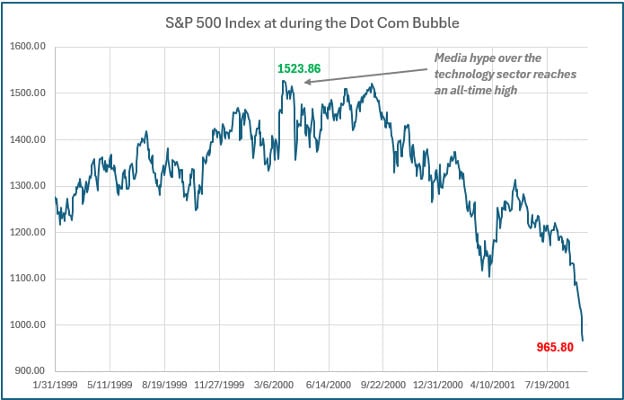
Exhibit 1 (source: Factset)
8. The Junk Bond Crisis (1980s)
During the 1980s, the rise of high-yield “junk” bonds was met with both enthusiasm and alarm. Media coverage often highlighted the risks and potential for defaults, contributing to investor anxiety. While there were notable defaults, the blanket skepticism overlooked the role these instruments played in financing corporate growth.
9. The Nifty Fifty Craze (1970s)
In the early 1970s, a group of blue-chip stocks known as the “Nifty Fifty” were deemed must-own investments, with media narratives suggesting they were impervious to market downturns. This led to overvaluation and, eventually, significant losses when the market corrected.
10. The Silver Rush (1979-1980)
The Hunt brothers’ attempt to corner the silver market led to a dramatic surge in silver prices, which was extensively covered by the media. The ensuing crash, when prices collapsed, left many investors who had bought into the hype facing substantial losses.
11. The FTX Collapse (2022)
The rapid rise and fall of cryptocurrency exchange FTX in 2022 was preceded by extensive media coverage lauding its innovation and leadership. The sudden collapse, amid allegations of fraud and mismanagement, highlighted the dangers of media-fueled hype and the importance of due diligence.
12. The COVID-19 Pandemic (2020)
As COVID-19 spread globally, media outlets oscillated between doom-and-gloom economic forecasts and euphoric coverage of tech stocks and the “work-from-home” economy. In March 2020, headlines proclaimed the fastest bear market in history, driving widespread fear. However, by the end of the year, the market had not only recovered but reached new highs, with some sectors like technology booming. Those who stayed invested, or strategically rebalanced, generally benefited, while those who succumbed to media-driven panic may have missed out (Exhibit 2).
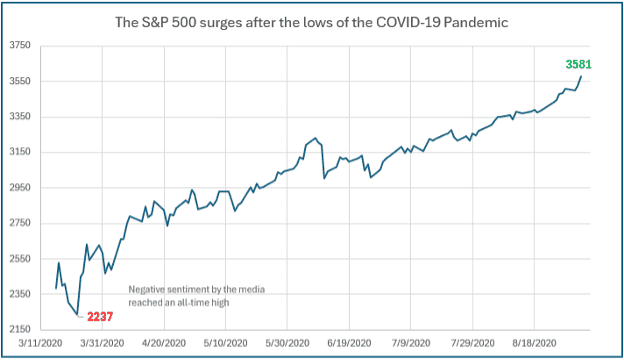
Exhibit 2 (source: Factset)
The Emotional Toll of Media Noise
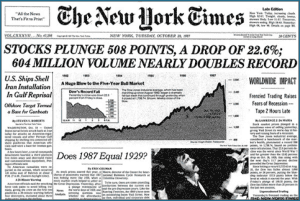 Continuous exposure to media narratives can evoke strong emotional responses, leading investors to make impulsive decisions. The fear induced by negative news can prompt premature selling, while exuberant coverage of market highs may encourage chasing overvalued assets. This behavior often results in buying high and selling low–the opposite of a successful investment strategy.
Strategies to Mitigate the Impact of Media Noise
- Emphasize Long-Term Planning: Align investment strategies with long-term financial goals rather than short-term market movements. This approach helps insulate portfolios from the volatility induced by media hype.
- Diversify Investments: A well-diversified portfolio can help spread the risks associated with specific sectors or regions that may be subject to media-driven volatility.
- Implement Personalized Glide Paths: Developing a customized investment trajectory that adjusts asset allocation based on factors like age or income can provide a structured approach to investing, reducing the temptation to react to short-term noise.
- Leverage Educational Resources: Utilize platforms like our “Indexopedia” investor resource center to deepen understanding of market dynamics and the benefits of institutional indexing, fostering informed decision-making.
- Schedule Regular Portfolio Reviews: Annual assessments of investment portfolios, including reviews of the prescribed glide path and current allocations, can reinforce commitment to long-term strategies and provide reassurance during turbulent.
Related Articles
The Media’s Role in Fueling Market Hysteria: Lessons for the Prudent Investor
Behavior,
History of Markets,
Investment Principles,
Markets,
September 19, 2024

Building a portfolio with a correction in mind vs timing the correction
Investment Principles,
Markets,
Portfolio Considerations,
October 1, 2024

The Power of Diversification: How Different Asset Classes Complement Each Other in a Balanced Portfolio
Behavior,
Index Sectors,
Investment Principles,
Markets,
Portfolio Considerations,
September 17, 2024