



By Indexopedia Research Team | February 19, 2025 | In
Investing carries a variety of risks, which can broadly be categorized as systematic risks and unsystematic risks. Systematic risks affect the entire market and are unavoidable, while unsystematic risks are specific to particular investments and can often be mitigated through diversification. Understanding these risks is key to building a resilient portfolio.
Systematic Risks (Market-Wide Risks)
Systematic risks, also referred to as market risks, impact the entire financial system and are beyond the control of individual investors. These risks cannot be eliminated through diversification but can be managed through careful asset allocation. Key types of systematic risks include:
- Market Risk: The risk of overall market declines due to economic events, changes in investor sentiment, or geopolitical instability. For instance, a recession or global financial crisis can cause widespread market losses. However, history has shown that over the long-term markets recover. For instance, if you invested $1,000 in the S&P 500 at the end of 1977 and reinvested your dividends, by the end of 2024 you’d have over $216,000! That’s despite the impacts of many recessions and the great financial crisis. Take a look at the chart below:
- Interest Rate Risk: Changes in interest rates can directly affect bond prices, with rising rates typically reducing the value of fixed-income securities. However, as rates rise, those who own individual bonds can continually reinvest their income over time at higher rates. The coupon payments and payment at maturity don’t change in that situation, only the resale price of your bonds. When rates are falling, fixed-income investors may face reinvestment risk, where bond proceeds or coupon payments must be reinvested at lower interest rates during a declining rate environment, potentially reducing overall returns. While interest rate movements can be unpredictable, bonds are considered a safer investment than stocks generally. This is one of the reasons bonds are still popular in most portfolios, playing a critical role in diversification.
- Inflation Risk: The risk that rising prices will erode the purchasing power of investment returns. Even if you are only holding cash, the value of this cash is continually diminishing. That’s another reason why having money in the markets is key to long-term success. Since 1977, the purchasing power of the dollar has fallen by over 500%. As you can see, staying on the sidelines has its own risks.
- Currency Risk: Fluctuations in foreign exchange rates that affect the value of investments denominated in other currencies. This is especially relevant for investors in global markets. Even investors in the U.S. are exposed to foreign currency risks when investing in companies abroad.
- Political Risk: The impact of political changes, regulatory shifts, or geopolitical events on the broader market. This type of risk is particularly significant in emerging markets. While there are many estimates of political risks by analysts, it is impossible to predict world events accurately. Stable governments and well-established property rights are two factors that might ease the concerns over political risks in a market.
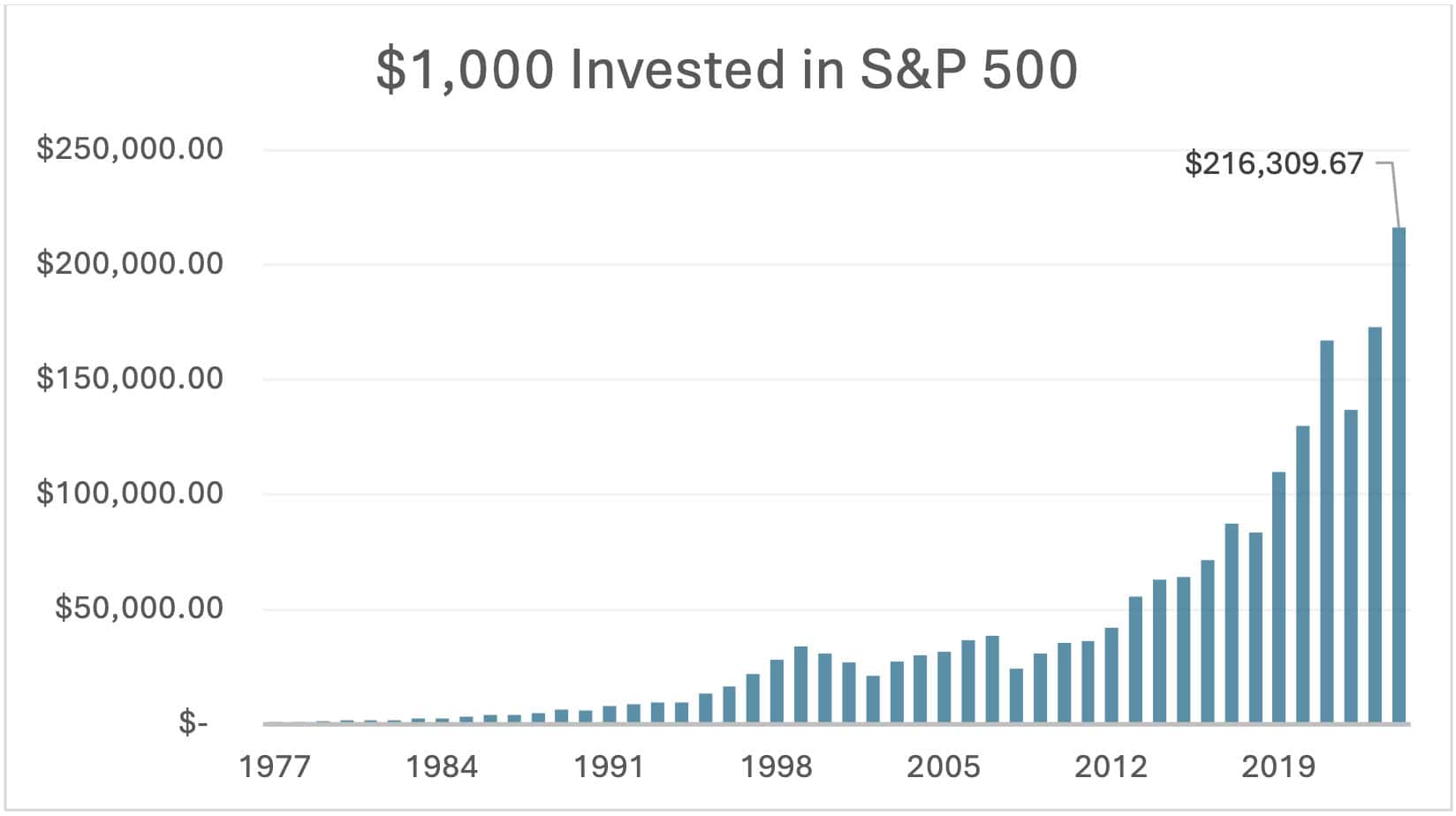
Source: S&P 500 total-return. You cannot invest directly in an index.
While systematic risks cannot be eliminated, strategies such as asset allocation across stocks, bonds, commodities, and other asset classes can help reduce their impact.
Unsystematic Risks (Investment-Specific Risks)
Unsystematic risks are unique to a specific company, sector, or industry and do not affect the entire market. Unlike systematic risks, these can often be mitigated through diversification. Examples of unsystematic risks include:
- Credit Risk: The risk that a bond issuer or borrower will default on their financial obligations, causing losses for investors. This is especially relevant for high-yield bonds or companies with weaker credit profiles.
- Concentration Risk: The danger of overexposure to a single asset, company, or industry. For instance, holding a significant portion of a portfolio in one tech stock can lead to substantial losses if the sector underperforms.
- Liquidity Risk: The risk of being unable to quickly sell an investment without significantly impacting its price. Illiquid investments, such as real estate or private equity, are particularly prone to this risk. In order to invest for the long-term, you need to be able to let your money grow uninterrupted.
- Business Risk: The risk that a company will fail to achieve its profitability goals due to internal or external factors. This can include poor management decisions, changes in consumer demand, increased competition, or rising production costs. For instance, a company dependent on a single product line may face challenges if demand for that product declines.
By diversifying across multiple sectors, industries, and geographies, investors can reduce the impact of unsystematic risks.
Investor Behavior is Key
Spreading risk is one of the most effective tools for managing risk. While it cannot eliminate systematic risks, spreading investments across asset classes can reduce the overall impact of market downturns. Similarly, diversification helps to eliminate unsystematic risks by minimizing overreliance on any single company, sector, or region.
However, even the most diversified portfolio can be undermined by behavioral risks, the tendency for investors to make poor decisions due to emotions, biases, or misconceptions. Behavioral risks include:
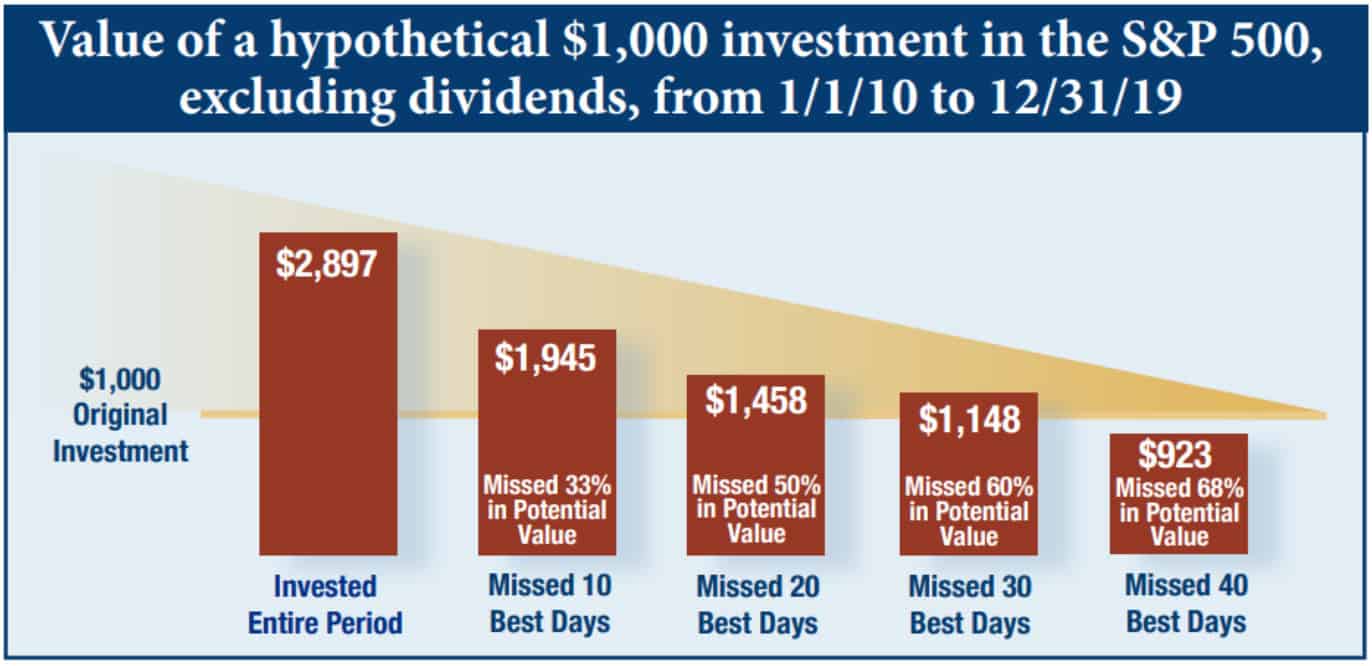
- Trying to Time the Market: Jumping in and out of investments in an attempt to predict market movements, often leading to missed opportunities. Remember: time in the market is more important than timing the market. By staying invested, you avoid the risk of missing out on the recovery after a down market. Look at how just missing a few days of returns can impact your overall results:
- Greed: Taking excessive risks to chase higher returns, which can backfire in volatile markets. Chasing a sector or asset that has had recent success often means buying high, rather than adhering to the age-old maxim of buying low and selling high. It’s important to understand that what is hot now may not be hot later. For example, the below illustrates how the Linden Thomas & Co. All-Cap Growth 150 versus the Small-Cap Value index rotated from dominant to lagging, and vice versa:
- Fear: Avoiding risks entirely, which can result in insufficient growth to outpace inflation or achieve financial goals. This often is a problem when a certain sector or asset is performing poorly in the short-term – if investors sell because of short-term losses, they lock in those losses and may miss out on the recovery.
- Misperceiving Risk Tolerance: Investing too aggressively or conservatively based on emotions rather than a realistic assessment of financial goals and time horizon. It can be easy to consider yourself “aggressive” when markets are booming, and it can be easy to consider yourself “conservative” during a pullback. That’s why it’s important to be thoughtful and honest when determining your risk tolerance.
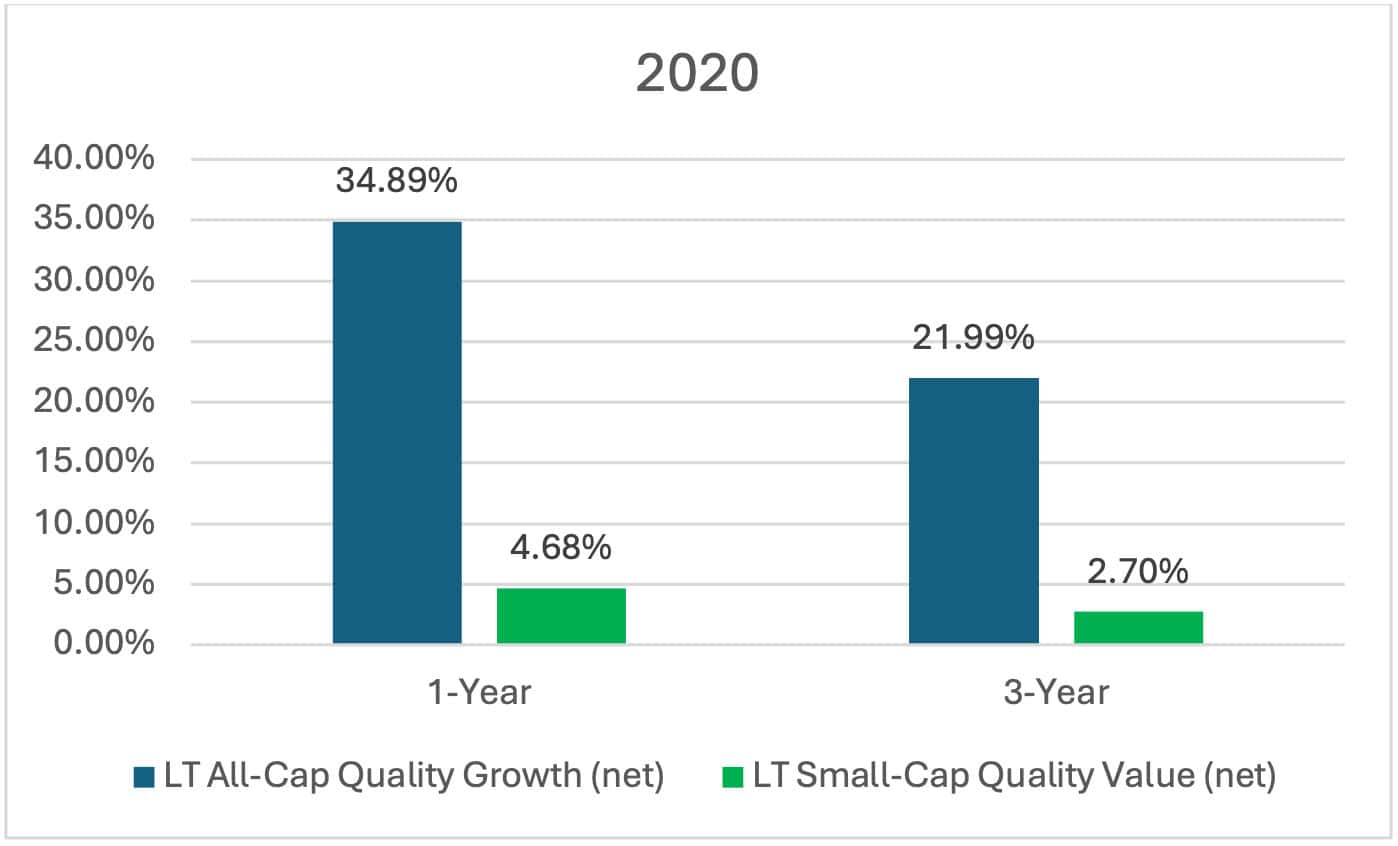
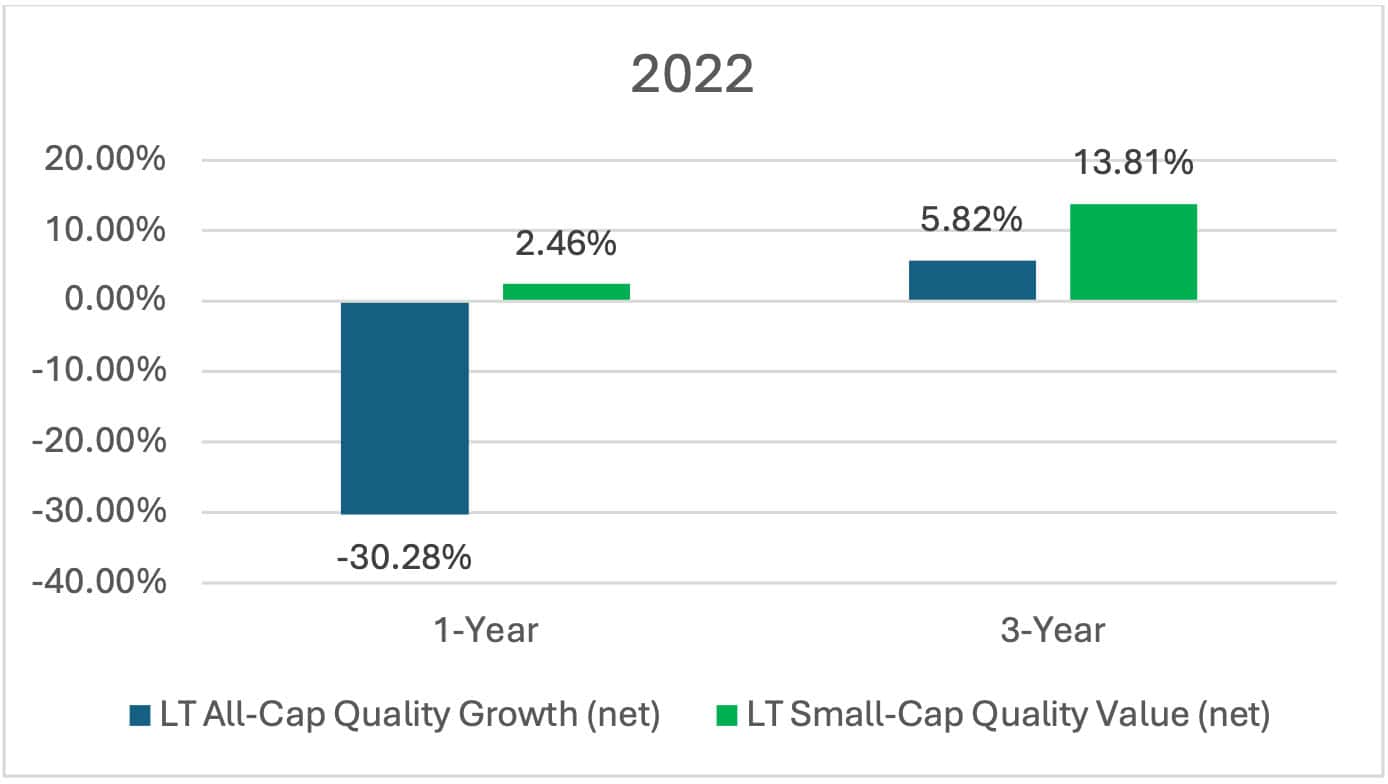
The performance results shown are those of a proprietary account at Linden Thomas invested using real dollars based upon the application of Linden Thomas’s Proprietary Linden Thomas All-Cap Quality Growth and Linden Thomas Small-Cap Quality Value 50 Index. These performance results are presented net of a .85% advisory fee. The performance results do not reflect the deduction of other fees or expenses, including but not limited to brokerage fees, custodial fees, fees and expenses charged by mutual funds and other investment companies, and any other fee or expenses a client may incur in the management of such client’s investment advisory account. A client’s return with respect to an investment would be reduced by any fees or expenses a client may incur in the management of its investment advisory account. The performance results are unaudited and are not an estimate of any specific investors actual performance, which may be materially different from such performance depending on numerous factors. No representations or warranties whatsoever are made by Linden Thomas or any other person or entity as to the future profitability of an investment account or the results of making an investment. Past performance is not a guarantee of future results.
Understanding and managing these behavioral tendencies is just as important as addressing systematic and unsystematic risks. Developing a disciplined investment strategy, focusing on long-term goals, and consulting with a financial advisor can help mitigate behavioral risks and lead to better investment outcomes.
Related Articles
How delistings impact investment results, especially when it comes to index funds
Index Investing,
October 15, 2024

The Correlation of Risk and Return: There’s no free lunch!
Investment Principles,
Top Investment Principles FAQs,
October 15, 2024

How Quality of the Portfolio Impacts Down Market Recovery and Compounding
Investment Principles,
Top Investment Principles FAQs,
January 15, 2025